
Who hasn’t heard of Whitby Abbey? We had intended visiting lovely Whitby on our journey north but ran out of time before meeting our friends at Berwick. Unexpectedly, due to the weather, we found ourselves able to fill in the gap. We stayed on a campsite just outside the town and walked in. The bus back was very welcome after a long day walking around the town and up to the Abbey.
The cliff top ruins of Whitby Abbey are very striking and can be seen from miles away. Possibly the inspiration for Bram Stoker’s famous “Dracula”. It’s monastery was founded in 657 by St Hilda of Hartlepool, daughter of King Oswy of Northumberland, and by 664 had become important enough to host the Synod of Whitby, an event of seminal importance in the development of Christianity. As with all such buildings there is a long and varied history to be discovered in the Visitor Centre.

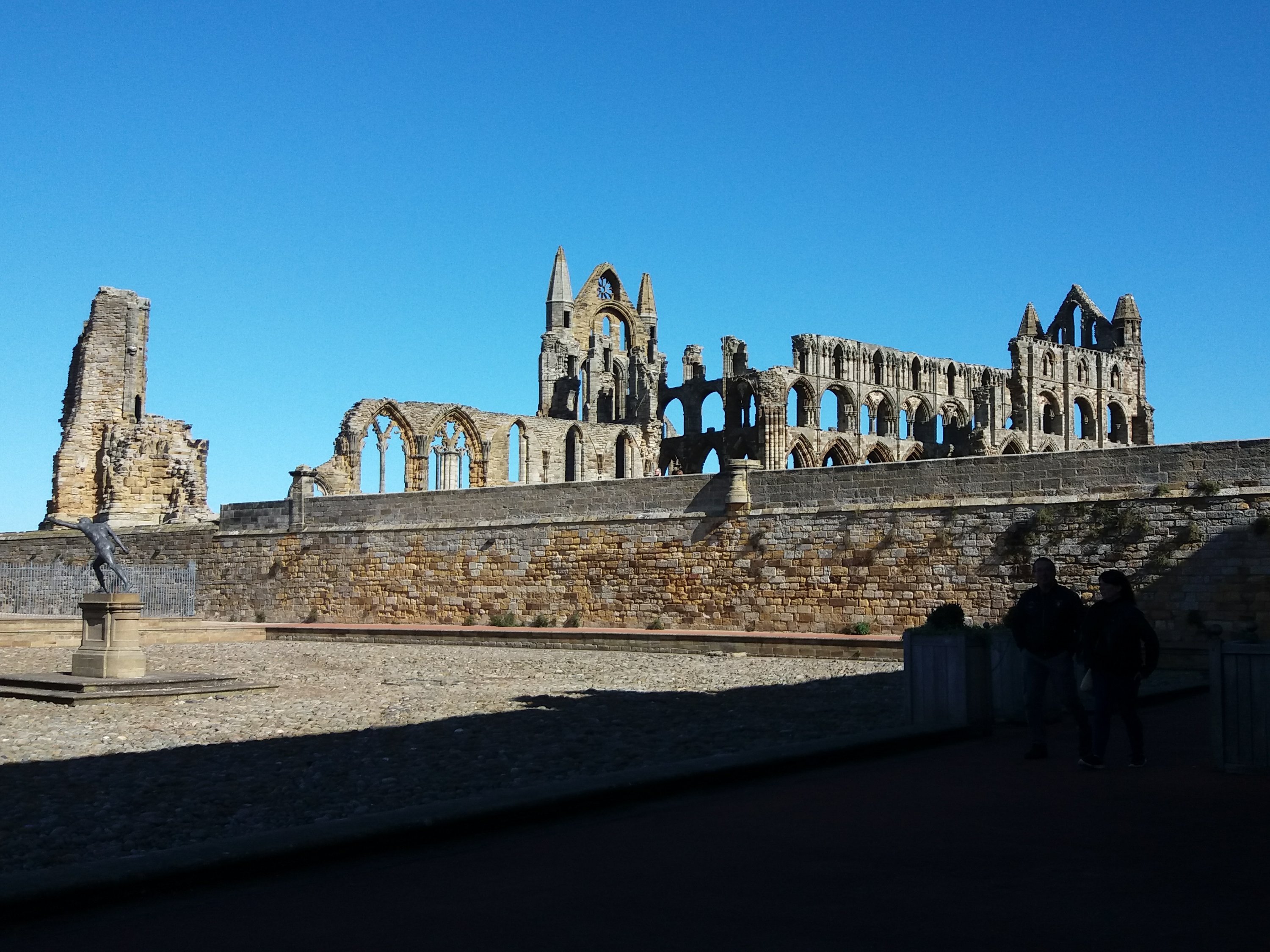
The route up to the Abbey involved climbing the 199 steps up to the church of St Mary. The stairs are now paved, but originally there was a wide wooden staircase built for pall bearers taking coffins up to St Mary’s. The church is a mixture of styles but sadly, it was not open for me to enjoy.

Having scaled the heights, I had some splendid views down over the harbour and the town.


We walked along the pier in the wind and enjoyed watching the powerful waves crashing into the sea wall.

The town is in two parts, either side of the River Esk. There are two piers and two lighthouses, both sides of the river having it’s own identity. There was plenty to enjoy in the way of small independent shops and eateries, and boat trips to suit all fancies.
Captain Cook was 9 years in Whitby learning his trade and his ship “Endeavour” was a converted Whitby built collier. His first voyage to the Pacific was 250 years ago. A replica of the ship is alongside in the harbour.

There is a lot to see in and around Whitby but as usual, we only managed a whistle stop tour of the main bits. We didn’t even partake of the famous fish and chips, a source of bemusement to our Northern friends!
Our next stop was Robin Hood’s Bay which is situated between Whitby and Scarborough, a long awaited treat as we have heard so much about it. This is the most heavily visited spot on this stretch of coast and is made up of gorgeous narrow streets and pink tiled cottages toppling down the cliff-edge site. It is an old fishing village but, in the 18th century, it was reportedly the busiest smuggling community on the Yorkshire coast. It has a recorded history dating back to 1322-1346 when a letter from Louis Count of Flanders to Edward 111, pleaded for the return of his ship which was taken to “Robin Oode Bay” by the people of England. There are many other historic facts and tales relating to this village which makes it a most interesting place to visit. It is also very picturesque.
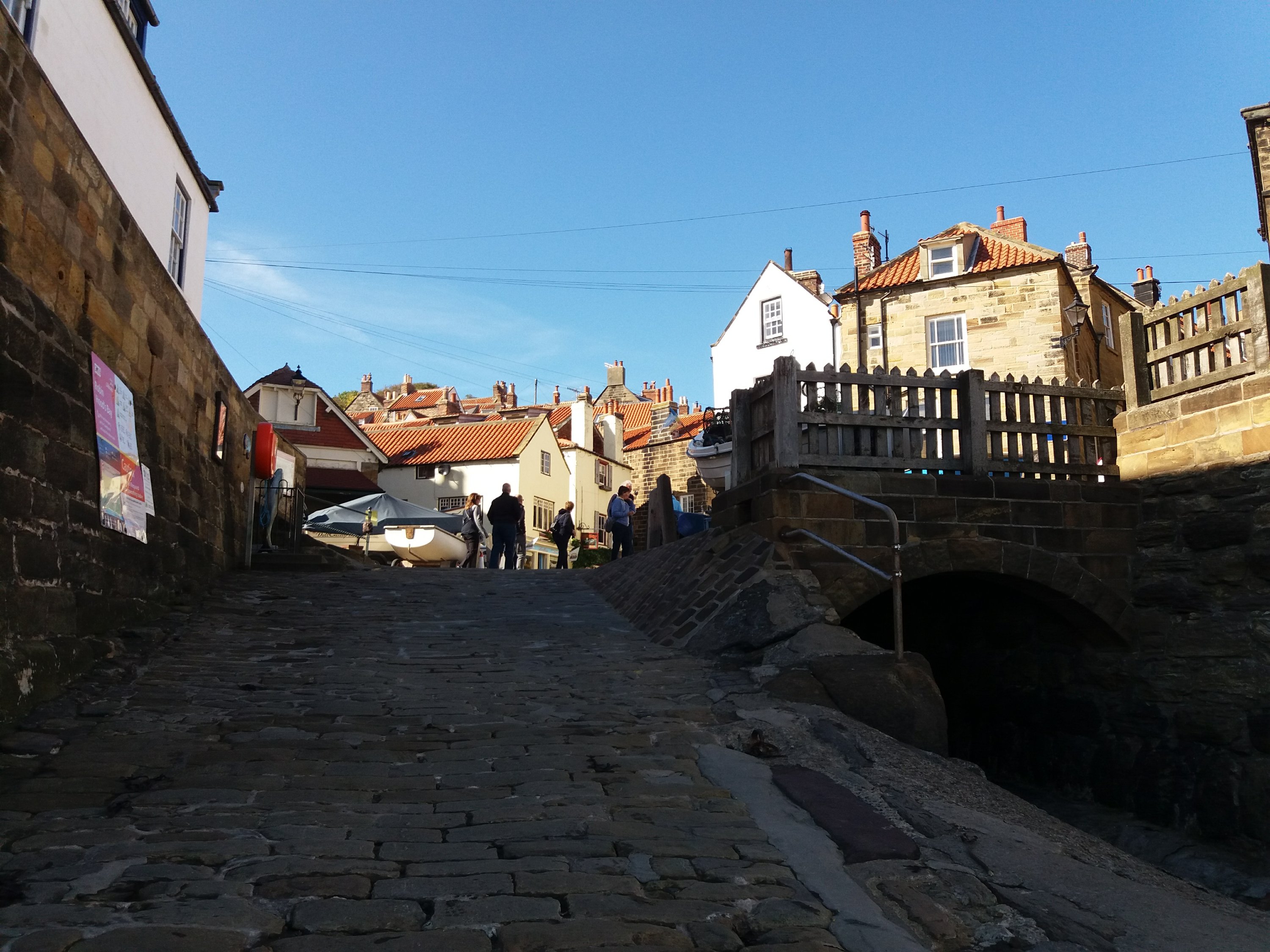

The Old Coastguard Station has been taken on by the National Trust and has been turned into a visitor centre with displays relating to the area’s geology and wildlife. We didn’t see any of the more exciting wildlife, but did enjoy the geology of the bay.


It was a good walk up and down the narrow streets and across the beach. We definitely enjoyed the welcome break back at the top.


This was a great place to spend the day and we were delighted that we had managed to find a gap in our schedule. We would love to visit again.
We were nearing the end of our sojourn but could not miss Scarborough. This is the oldest resort in the country which first attracted early 17th century visitors to it’s newly discovered mineral springs. The Victorians enjoyed it as a “Watering Place” but, it was transformed after WW2 when it became a holiday haven for workers from the industrial heartlands. It still retains it’s holiday resort persona with a mixture of beautiful sandy beaches, amusements and old town streets. The more modern shopping centre stretching down from the railway station is less attractive.


We rather liked the bay and could just imagine spending happy days here with the grandchildren. We have a friend who is very likely to do just that as she is a Scarborough girl. Clyde was less than kind in his comments about Scarborough on Facebook, and rightly incurred the wrath of some of our Northern chums! Personally, I rather liked it although, Robin Hood’s Bay is more my “cup of tea”.


The tramway down to the beach is still running and we made use of it after a long walk around the headland. Scarborough is a proper old seaside resort with much to commend it.
By now, it was nearly time for us to be in Newark on 28th Sep, but we just had time to call in at Beverley to visit the magnificent Minster. Beverley is a small market town with a tangle of old cobbled streets and elegant Georgian and Victorian terraces. The Minster dominates the town with it’s Gothic twin towers. We were treated to an impromptu tour by an enthusiastic German lady who is an enthusiastic adoptee of the town.
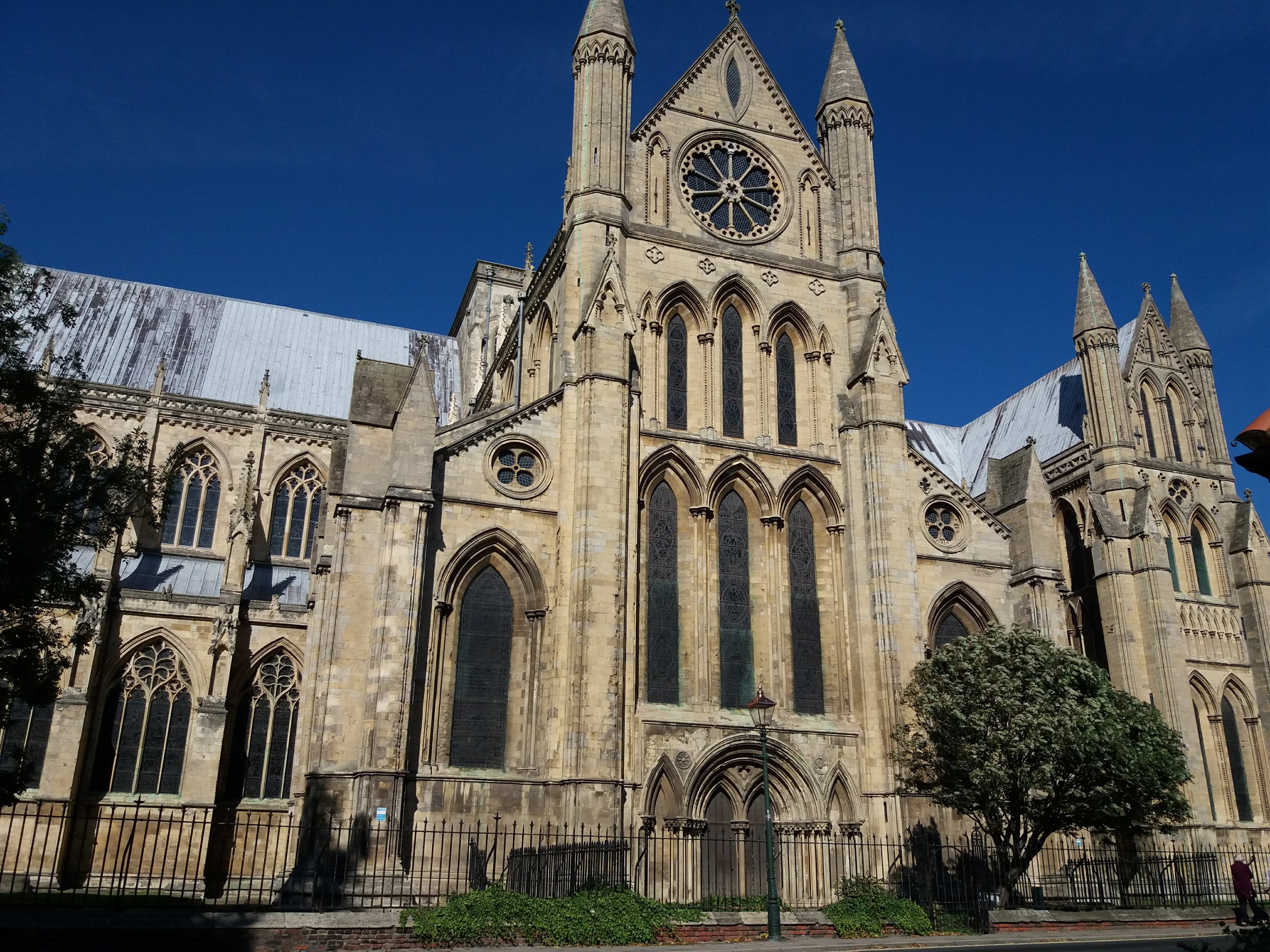
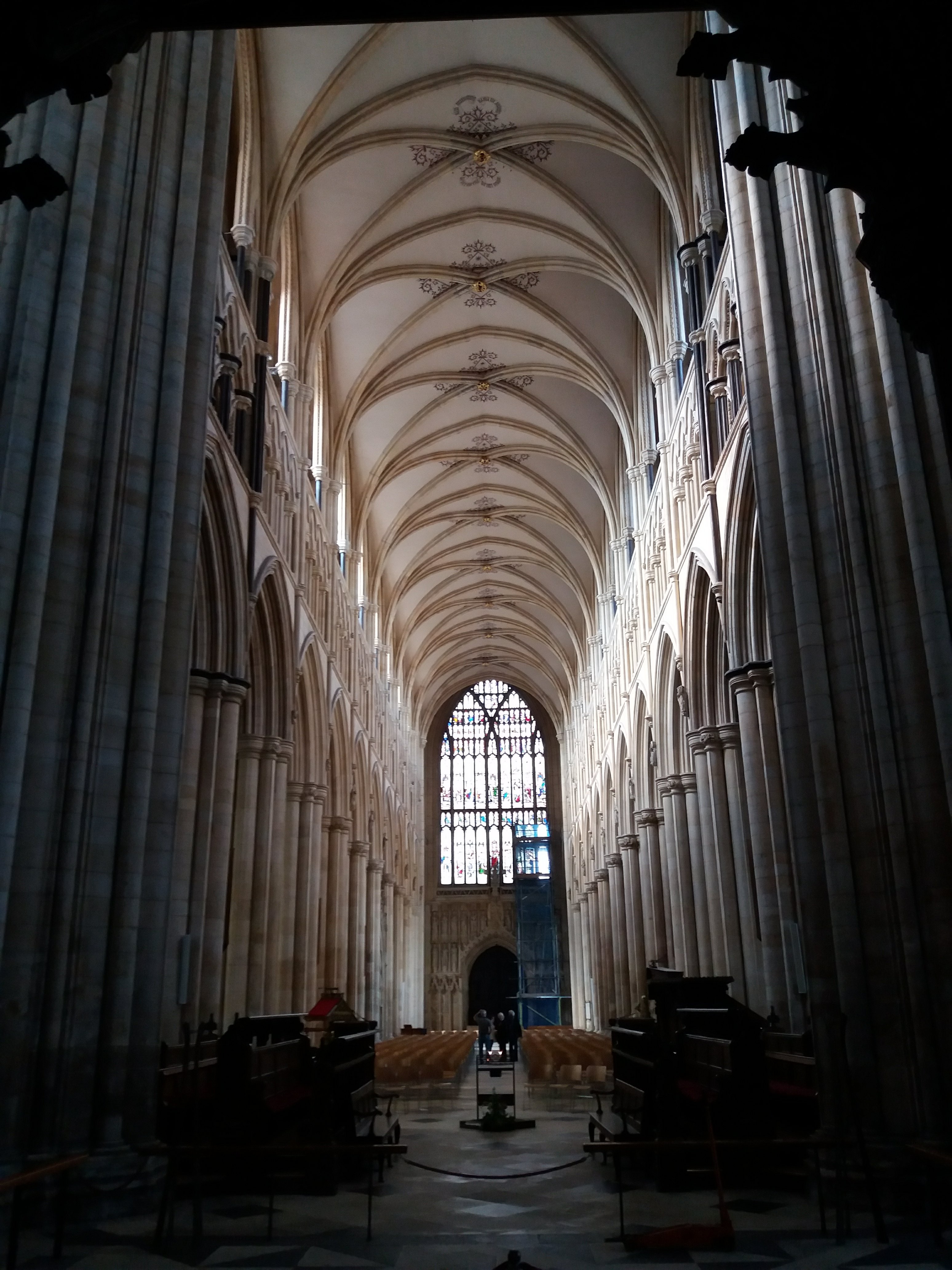

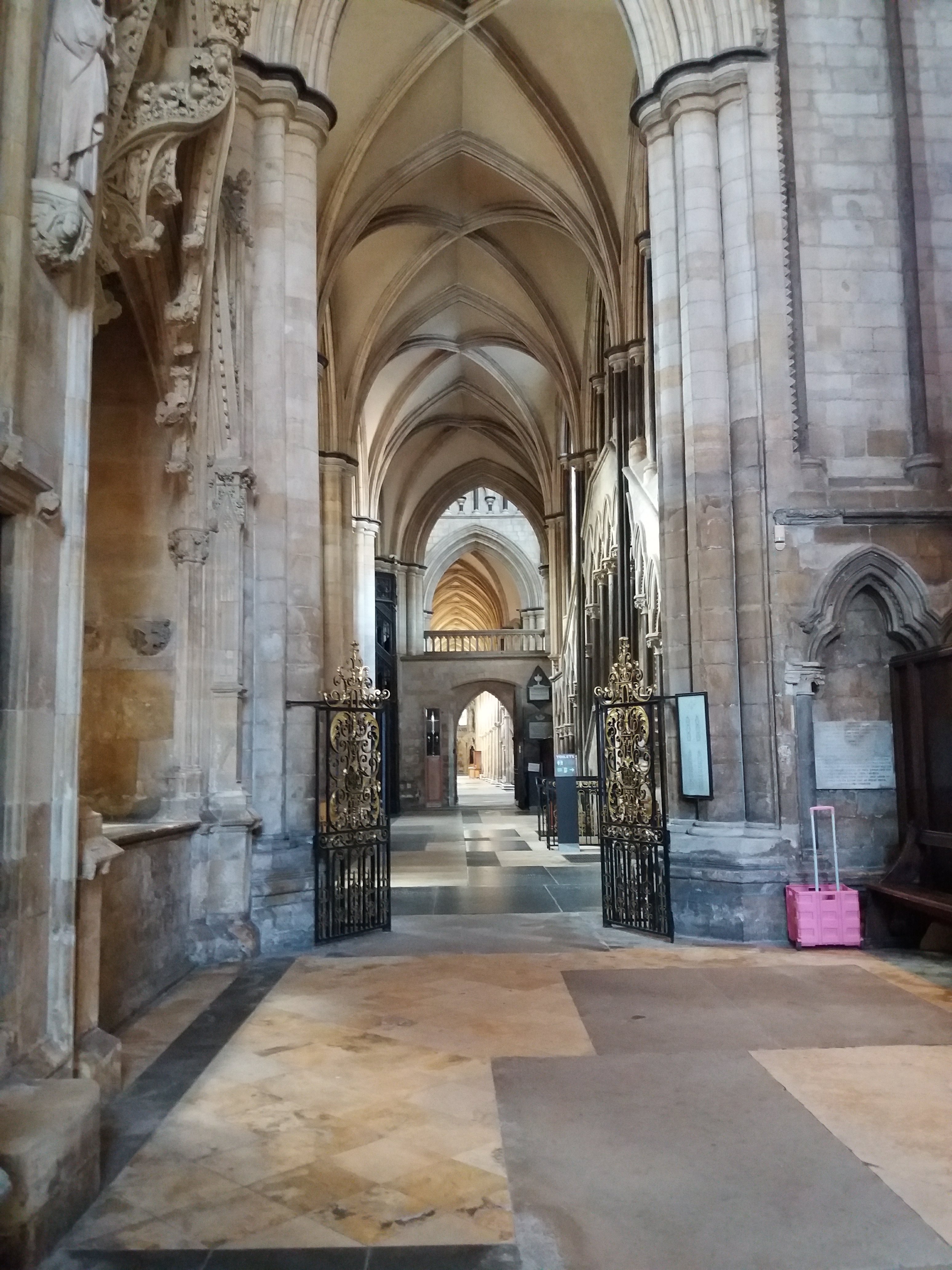


This was the last stop on our way back towards central England and some overdue family time.