We did not expect to find ourselves back in Peniscola almost exactly a year after the last visit. Due to a late start to our Winter trip, we had to change our itinerary and travel down the east side of Spain instead of coming down through Portugal. After our stay near Barcelona we decided that we would stop off at Peniscola and visit the castle. Last year we enjoyed the old town but did not go into the castle.
The sight of the castle from the promenade is still stunning, especially if you catch the sun shining on the white buildings.
Old city from the promenade
The colourful letters proclaiming the name of the town with the old city as a backdrop is eye-catching. It was so popular with the tourists that I had to wait a long time to get an unadorned picture!
Town name with old city backdrop
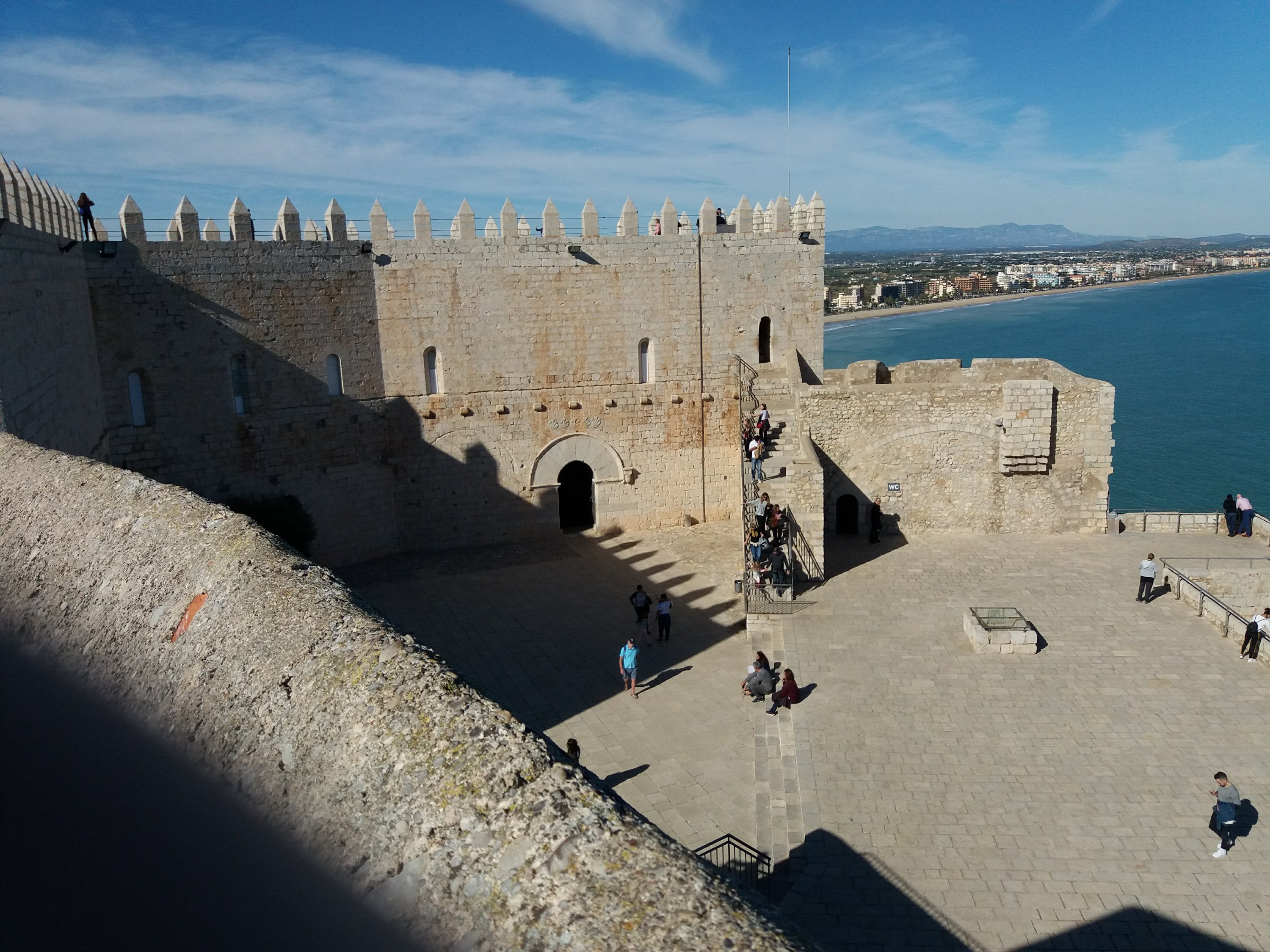
Peniscola is called “The City in the Sea” as the spur it sits on is surrounded by water everywhere except it’s northeast corner. Due to its position, it has been popular with a number of civilisations from the time of the Phoenicians. Between 1294 and 1307, the Knights Templar built the Castle upon the remains of The Arab citadel. The castle was the residence of Pope BenedictoXIII when he was in exile from Avignon in 1411. He changed the castle into a palace and papal library. Today the castle is a historical preservation area and is an interesting place to visit, with fantastic views.
We focussed on the castle on this visit and enjoyed the increasingly splendid views as we climbed up through the steep streets to the top. It is a bustling town with lots of touristy shops and plenty of restaurants. The residents have an interesting journey through the steep and narrow streets in their scratched and battered little cars!
Here are a few pictures from the trip.
Lower part of the old townWhitewashed buildings typical of the old townAmazing shell covered house in the old townLooking down at the lighthouse from the rampartsView down into the castle courtyard
The artillery gardens have been developed on the old artillery storage deep in the rocks below the castle. There are many old caves hewn into the rocks which have stood the test of time and were home to weapons and gunpowder. Today, the landscaped grounds are a peaceful spot and home to several birds of prey. We didn’t manage to ascertain why they are kept there but they seemed to be quite content on their perches in the shade of the palm trees.
Looking up front the Artillery GardensLooking out from the Artillery Gardens to the seafront along the promenade
The weather was a bit unsettled whilst we were here but, I managed to get the washing done, stir my lazy bones with some brisk walks along the promenade and excite my brain with a bit of history. It was definitely worth the return visit.
After our stay in Beynac, we had intended to visit more of the beautiful villages but the weather had turned nasty so we had a brief stopover in Port Vendres, howling winds and horizontal rain included.
Port VendresOne of the guns ovelooking the entrance to the portAnother of the gunsCopy of a painting of this scene by Charles Rennie MacIntosh
We then fled the rotten weather in France and agreed to meet up with some friends at Vilanova I Geltru. At their suggestion we stayed on a campsite with a bus service to Barcelona. Very handy.
It is a long time since we last visited Barcelona. On that occasion, we flew from our home in Germany and met up with some friends from the UK. We all stayed in the same hotel on the Ramblas. We had a thoroughly good time visiting all the Gaudi attractions as well as enjoying late meals in the lively old part of the city and soaking up the atmosphere along La Ramblas.
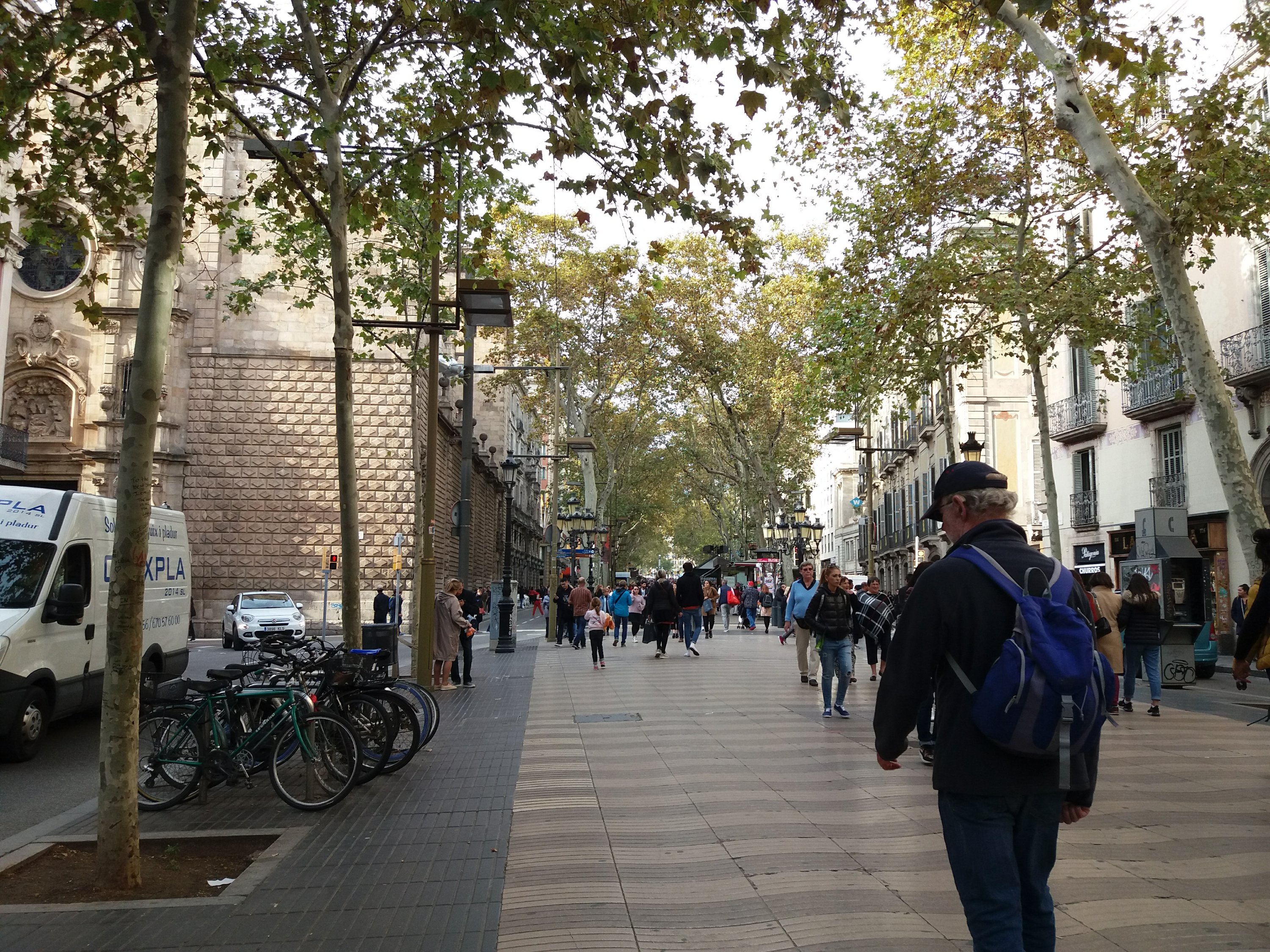
Clyde strolling ahead down La Rambla
This flying visit was a chance to revisit the Ramblas and have a stroll around the port. It did not disappoint, which is a relief when revisiting old haunts. The food market, Mercat de la Boqueria, was vibrant and the human statues suitably impressive.
Colourful food market in La RamblaCurious display of seafood!
We were delighted to see one of the human statues take a call on his mobile!!
Human statue receiving a phone callEven statues have to answer the phone!Elaborate human statueThis one kept moving!
We passed the Iglesia Betlem and decided to have a quick look. It was built in 1681 in Baroque style for the Jesuits, but was completely gutted in 1937 as anarchists ransacked the city’s churches. It is an interesting mixture of styles.
Exterior of the Iglesia BetlemMoorish influence in the churchOne of several magnificent side chapelsInside the Iglesia Betlem
At the port end of the Rambles is the Mirador de Colon. This is a striking statue that commemorates the visit made by Christopher Columbus in June 1493.
Columbus statueOne of 4 lions guarding the Mirador de Colon
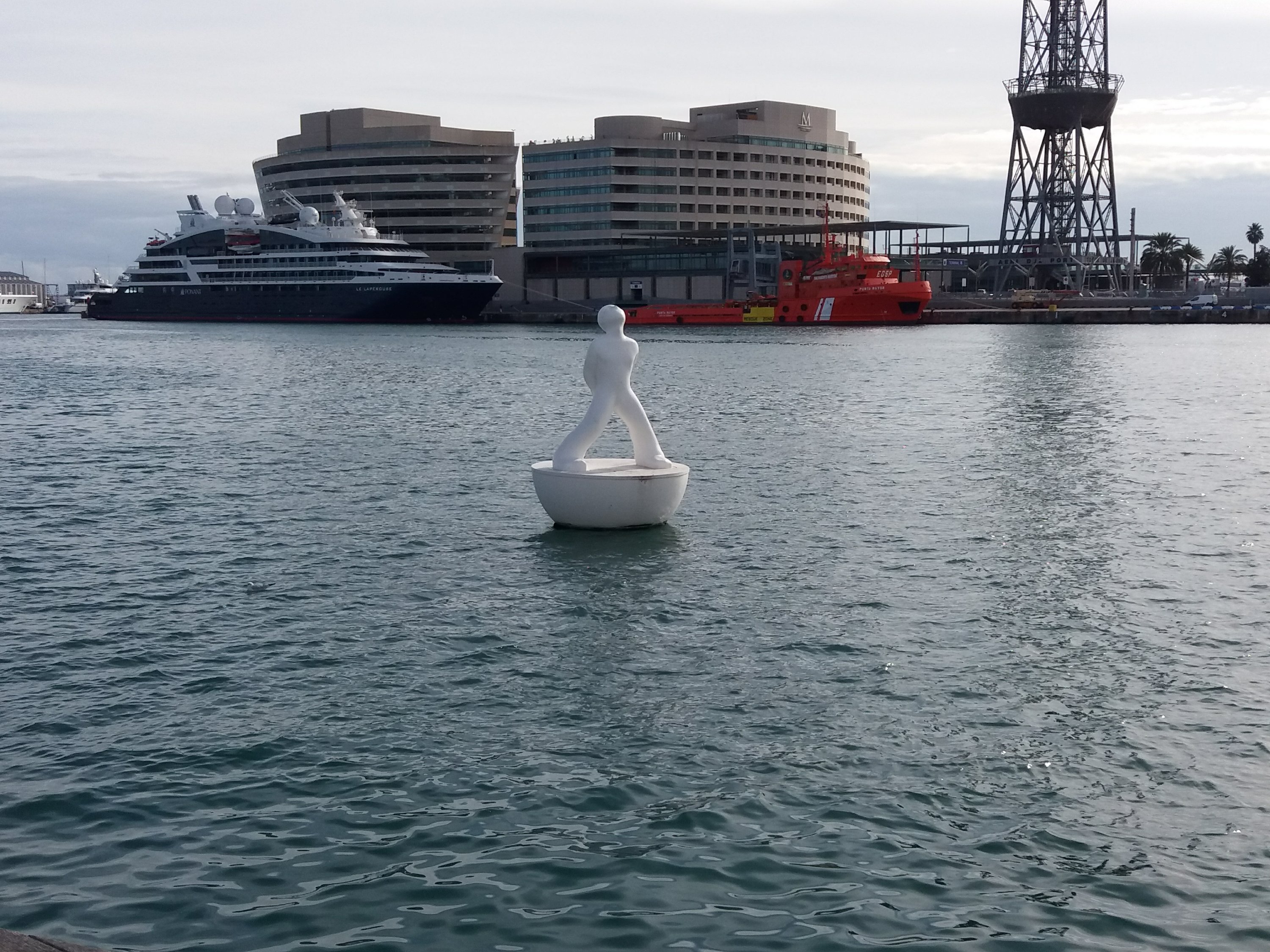
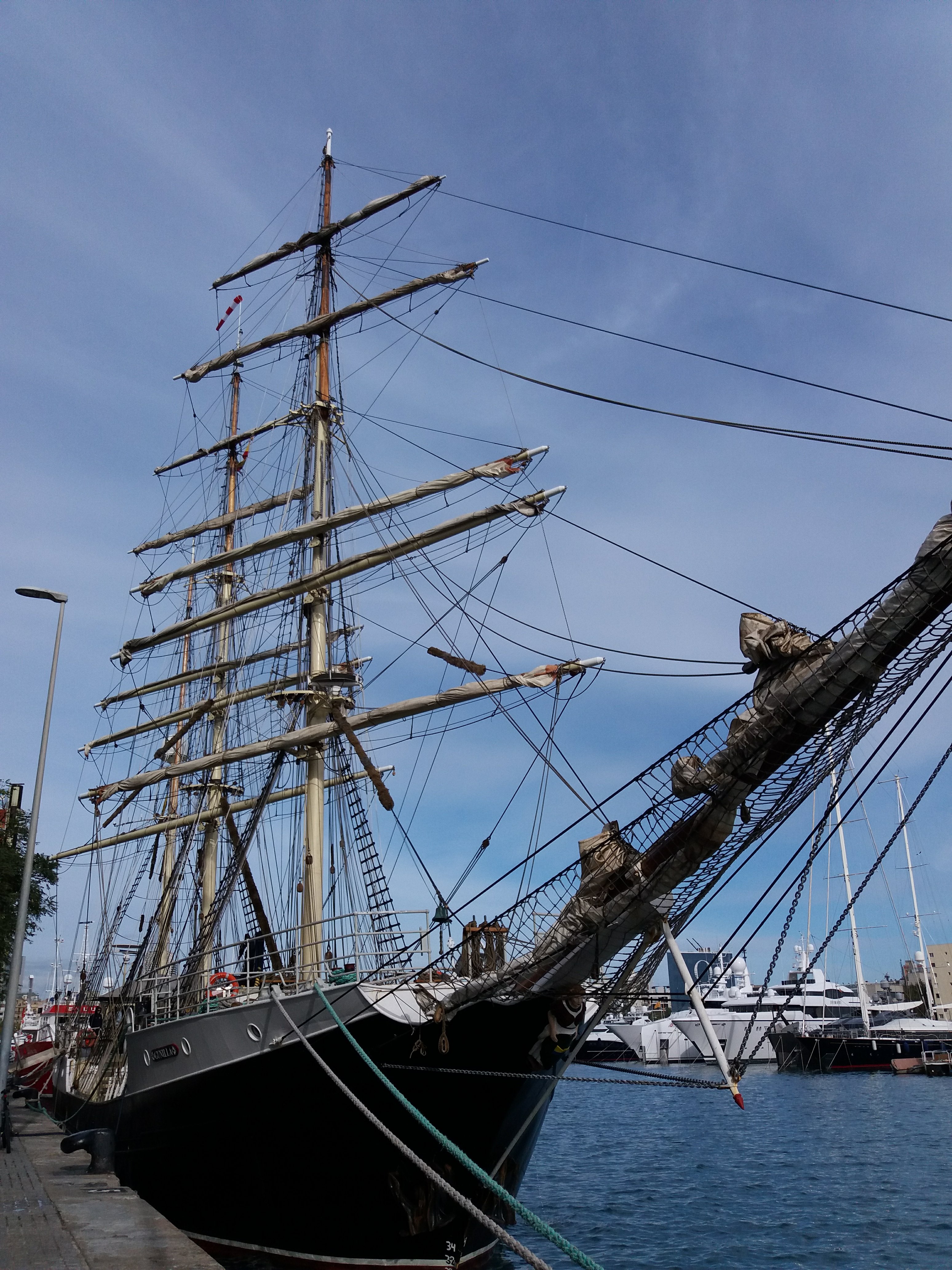
The old port (Port Vell) is a great attraction and has been transformed into an entertainment zone. The wooden swing bridge takes you across to restaurants, boutiques and gift shops. There are splendid views of the harbour and you can also enjoy a walk around the marina marvelling at the multi-million pound yachts.
One of two floating statues looking up into the skyInformation about the floating statueThe old and the new in Barcelona marinaTall ship in Barcelona marinaLobster sculpture on the promenade
After our walk around the marina we explored a few of the small roads and squares off La Ramblas. There were plenty of tourists livening the place up.
One of the many squares off La RamblaWe had a late evening meal in this square on our last visit
By now we had sore feet so we found our way back to the bus. Our return trip to Barcelona was very enjoyable and less hectic than last time. On that occasion we had visited all the main attractions. This time we just soaked up the atmosphere.
Beynac-et-Cazenac is one of the Beaux Villages. After our sobering visit to Oradour, we thought it would be uplifting to stroll around a beautiful old village. We had already identified this as a possibility en route to the East coast of Spain and it also has an Aire for us to stay overnight.
We arrived at the village late afternoon and the warm sun was lighting it up and shining on the river Dordogne.
A gabare (sailing barge) now used as a tourist river trip vessel.
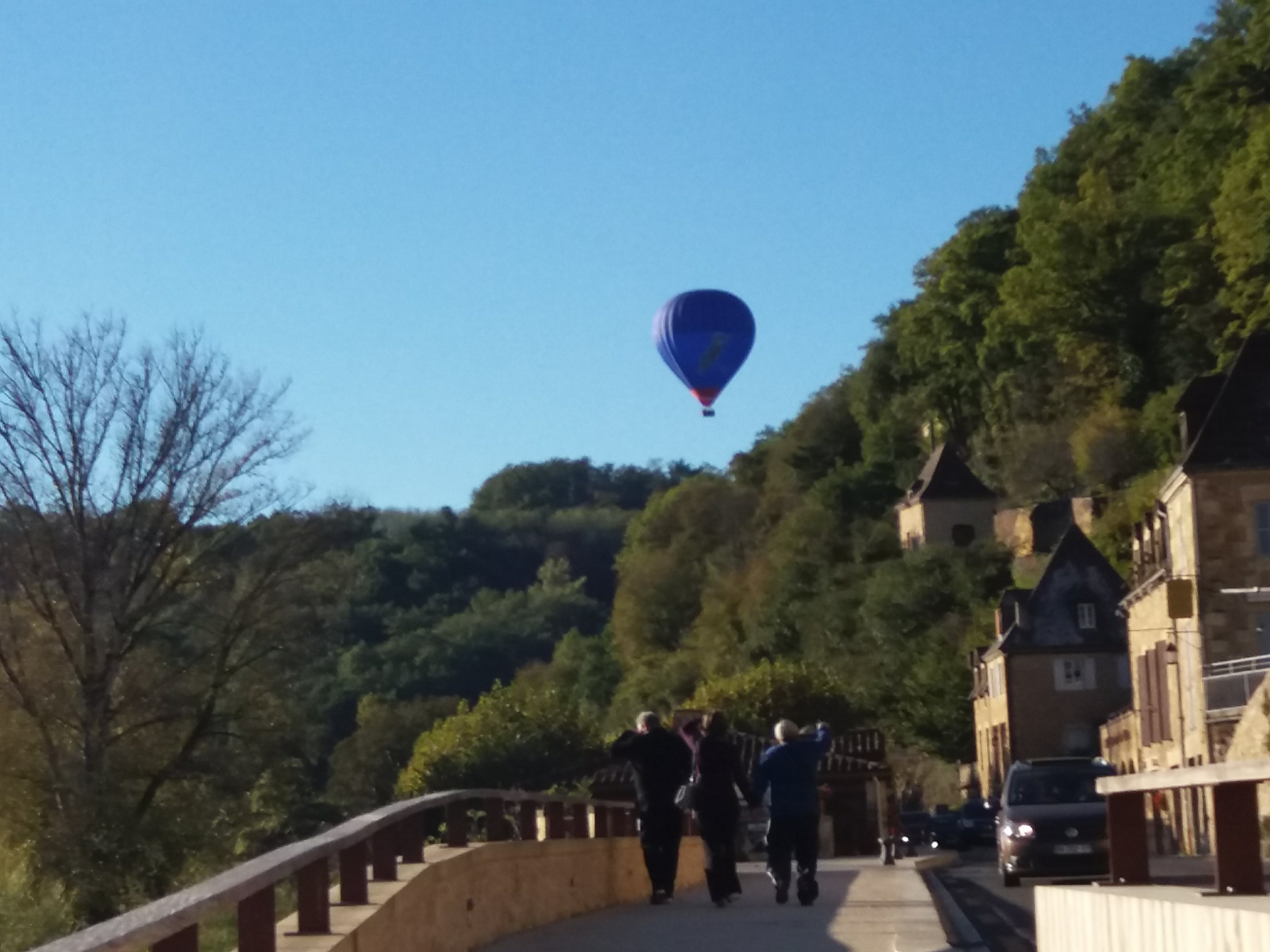
We parked on the aire and walked down to the town just in time to see two hot air balloons rising into the sky.
Hot air balloon rising over the Dordogne valley
It was so pleasant that we treated ourselves to a glass of wine at the riverside terrace restaurant along with a few of the locals. It was so nice that we booked a table for the next evening, as it was our wedding anniversary, and thus decided to stay for 2 nights.
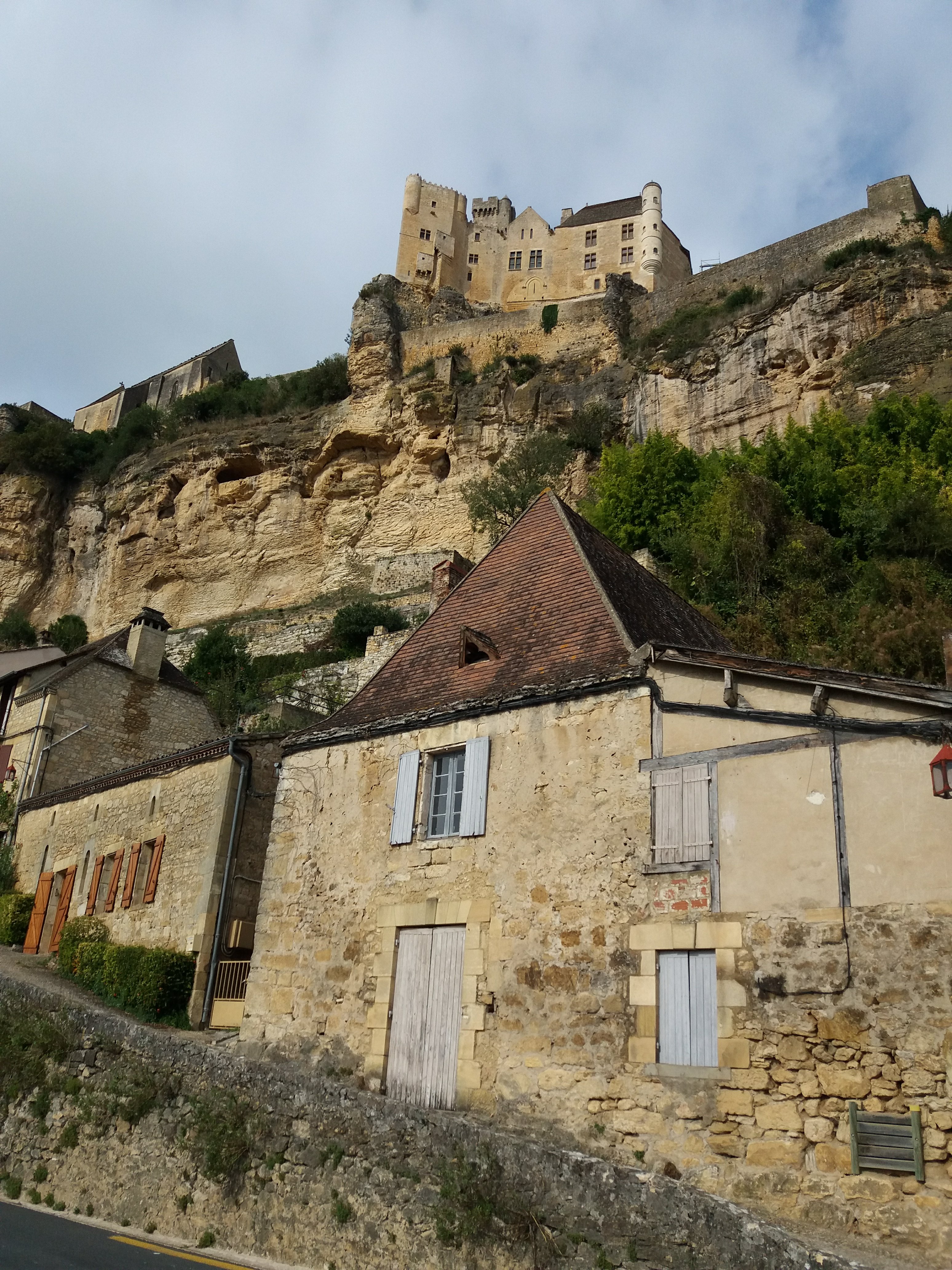
The site of Beynac has been occupied since the Bronze Age and the naturally defensive site became the seat of one of the four baronies of Perigord during the Middle Ages. The castle was besieged by Richard the Lionheart in 1197, then demolished by Simon de Montfort. It was rebuilt before being recaptured during the Hundred Years War(1337-1453) by the armies of both the English and French kings. It was abandoned during the French Revolution and fell into disrepair. It’s owner began restoration work in 1961 and it is still on going. The castle towers over the village below and is a most impressive sight.
The castle seen from the road to the aireThe castle seen from the riversideCastle overlooking the valleyCastle from top of the villageClose up viewLooking up at the village from the road along the river
The village was very quiet when we were there as it is out of season. We climbed the steep, narrow streets carefully as the cobbles are uneven and would be slippery in wet weather. However, we were treated to some stunning vistas on the way and were struck by how medieval it still seems.
Medieval street
The castle has a few rooms with furniture to give an idea of its splendour but, it is mostly empty.
The great hall. Every castle should have one!
Outside the castle grounds afford splendid views of the village and valley below.
Looking down over the villageThe winding Dordogne riverLong way down to the rooftops alongside the road
There are splendid views across the Dordogne valley and you can’t help marvelling at the work involved in building such a commanding bastion.
After another night in the peaceful aire we started the trek southward, hoping to escape the increasingly chilly temperatures.
You cannot fail to be moved by the experience of visiting the Centre de La Memoir at Oradour. We had heard about it from fellow travellers and, finding ourselves heading this way, we could not miss it.
We parked at the free aire on the other side of the current village of Oradour and walked to the memorial site. On the day we visited we were lucky to have a beautiful sunny autumn day. The horrors of the events of 10th June 1944 were very much at odds with such a lovely day.
The memorial centre traces the historical events from 1933 to 1953, from the growth of Nazism in Europe to the Bordeaux trial. There is too much to recount here but, the massacre that took place on 10 Jun 44 was a terrible reprisal for attacks by French maquisards.
On that day, a Waffen SS unit of the “Das Reich” division encircled the village of Oradour-Sur-Glane. They hearded the women and children into the church, used the men to search for weapons and dig their own graves. Some villagers were held in the village square. Simultaneously the soldiers shot all the villagers. They set off a gas bomb in the church and when that failed to kill everyone they threw in grenades. This was a massacre of 649 innocent people in order to subdue the occupied population of France and send a warning to the resistance. After the murders, they piled the bodies up and set fire to them followed by the village buildings. Before burning the buildings the soldiers looted them, removing anything they could carry.
The entire village has been preserved as a shrine. There are rusting cars, bikes, sewing machines and, in the church, a child’s toy pram. Some of the signs are still there such as those on the garage. The post office still has it’s facade and the bread ovens are still there in the boulangerie. There is a cafe table outside one of the village cafes. It is an extremely moving memorial to those 649 people.
The village squareOne of many sewing machinesParked carsTram lines and electric cables still hereSpeaks for itselfInside the churchRuined cafePost officeOld wooden shutters still here
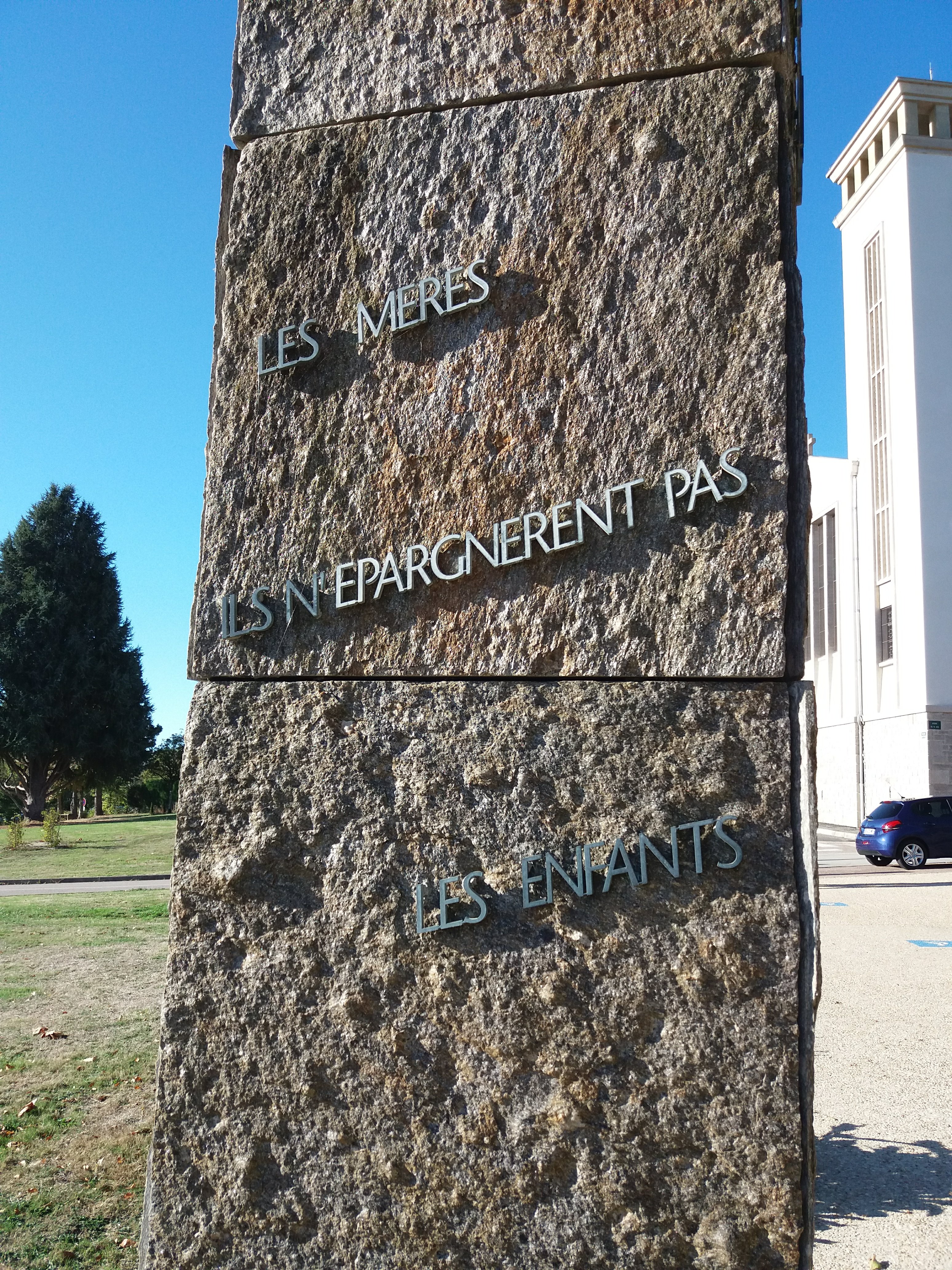
Outside the memorial village there are further monuments to the people who died.
Memorial statue dedicated to the women and children
The names of all 649 villagers who were massacred
The village was entirely rebuilt in the following years. The buildings were all a subdued grey as befitted the occasion but, in more recent times, colour has started to return. The people of Oradour honour their murdered relatives with two silent memorial events each year and by continuing to live and work here. Life goes on but this atrocity will not be forgotten.
We had to spend some time at home sorting out family business and giving the van a good clean. After a few nights free camping in Gosport, visiting the dentist and other tedious tasks, we found ourselves free to get moving again so, I phoned DFDS to book a ferry and we were all set. We called in to visit Marcus in Emsworth on our way through to Newhaven and dashed off to spend the night at the ferry terminal. The crossing next morning was very pleasant, sunny and calm. We decided to stay on the aire at Dieppe before starting our journey south.
Last year at this time we had just started our adventure of living in the van and travelling as much as possible. We have learned a lot in that year. On that journey, we travelled down the west coast of France and into Spain which meant that we cut through the middle and popped out at Peniscola. This year we have decided to travel into Eastern Spain and I am looking forward to visiting Toulouse and Carcassonne on the way. We have no other plan except to be at Alicante airport for our flights home on 22 Dec.
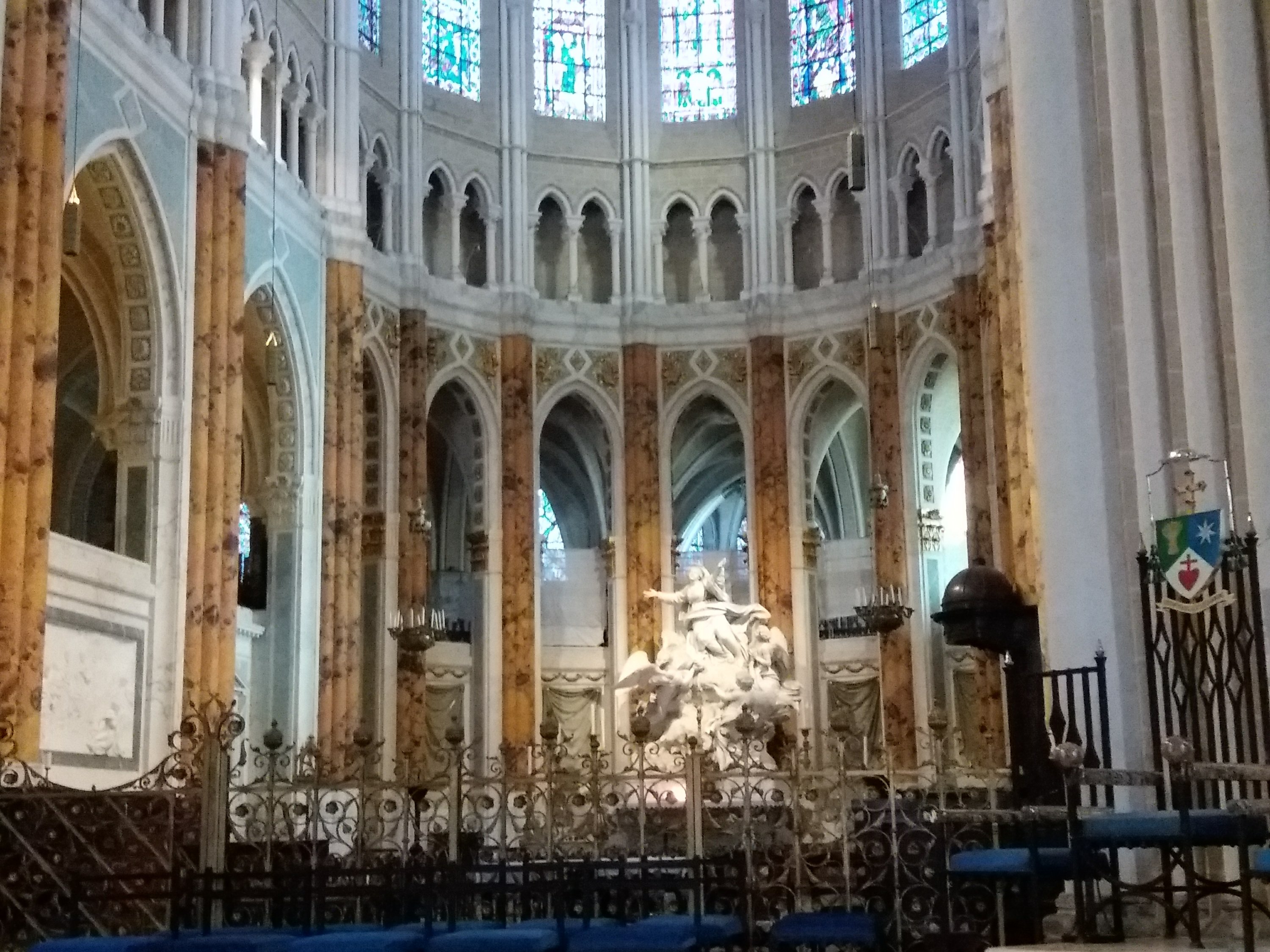
Our first stop was Chartres, another small old town dominated by an enormous Gothic cathedral. We booked into a campsite that is handy for walking into the town and enjoyed the Autumn sunshine. It was Sunday when we made our first sortie into the town and as ever, there were people enjoying coffee and food at the many establishments. There was also a flea market on in the covered market place which was attracting a few shoppers. Chartres is a very old historic town with Roman origins but became an important centre in the Middle Ages.
Medieval building housing the Tourist Information Office
The town and the cathedral were given new life in 876 when Charles the Bald donated the holy relic of “Mary’s Veil”.
Holy Relic infoHoly Relic behind bars
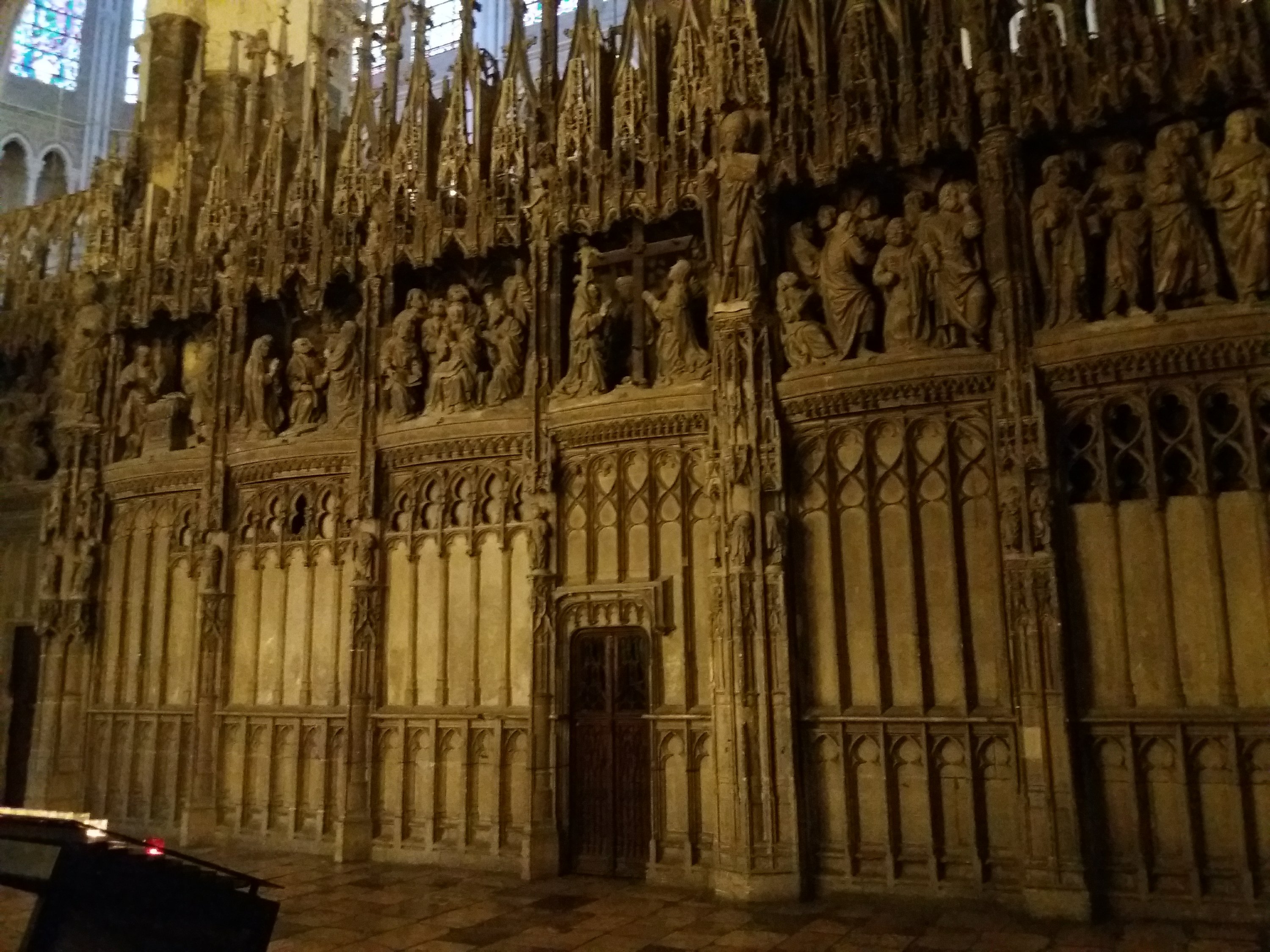
Following that, the cathedral has had a long and chequered history with several devastating fires and resulting rebuilds. Chartres suffered badly from the Black Death in 1348 and the town became smaller and the outlying districts were abandoned. In 1979, the cathedral was registered on the UNESCO World Heritage List.
The cathedral has been granted a 15 million Euro facelift and the difference is very visible where the work has already been carried out. There is still a long way to go but, it will be almost like seeing a new cathedral. There is a film running of the restorers going about their craft and numerous information boards explaining the history and how the current work is enhancing and preserving the building.
Before restorationAfter restoration
The dimensions of the cathedral are tremendous and you can only marvel at the skill of the many craftsmen who must have worked on it. I wonder who project managed it!
Partly restored
The exterior is also eyecatching and we sat on a bench in the sun to soak it in.
Exterior view from the sideCloser side viewFront view showing the two towers
The left tower, which is much more flamboyant, is the newer addition dating to the 16th Century. The right tower was built in the 12th century and is much less detailed. The rose window in the centre dates back to the 13th century.
There is much more to Chartres than the cathedral and there were so many places to visit that we missed. We did walk along the Esplanade De La Resistance in our search for somewhere to buy some fruit and milk. A very nicely laid out memorial walk.
Pink granite fist in tribute to Jean Moulin, first President of the Conseil National de la Resistance
The church of St Pierre is a well preserved gothic masterpiece apparently. Unfortunately, we were not able to go inside due to work being carried out.
church of St PierreSt Pierre descriptionChurch of St Pierre dominating the surrounding streets
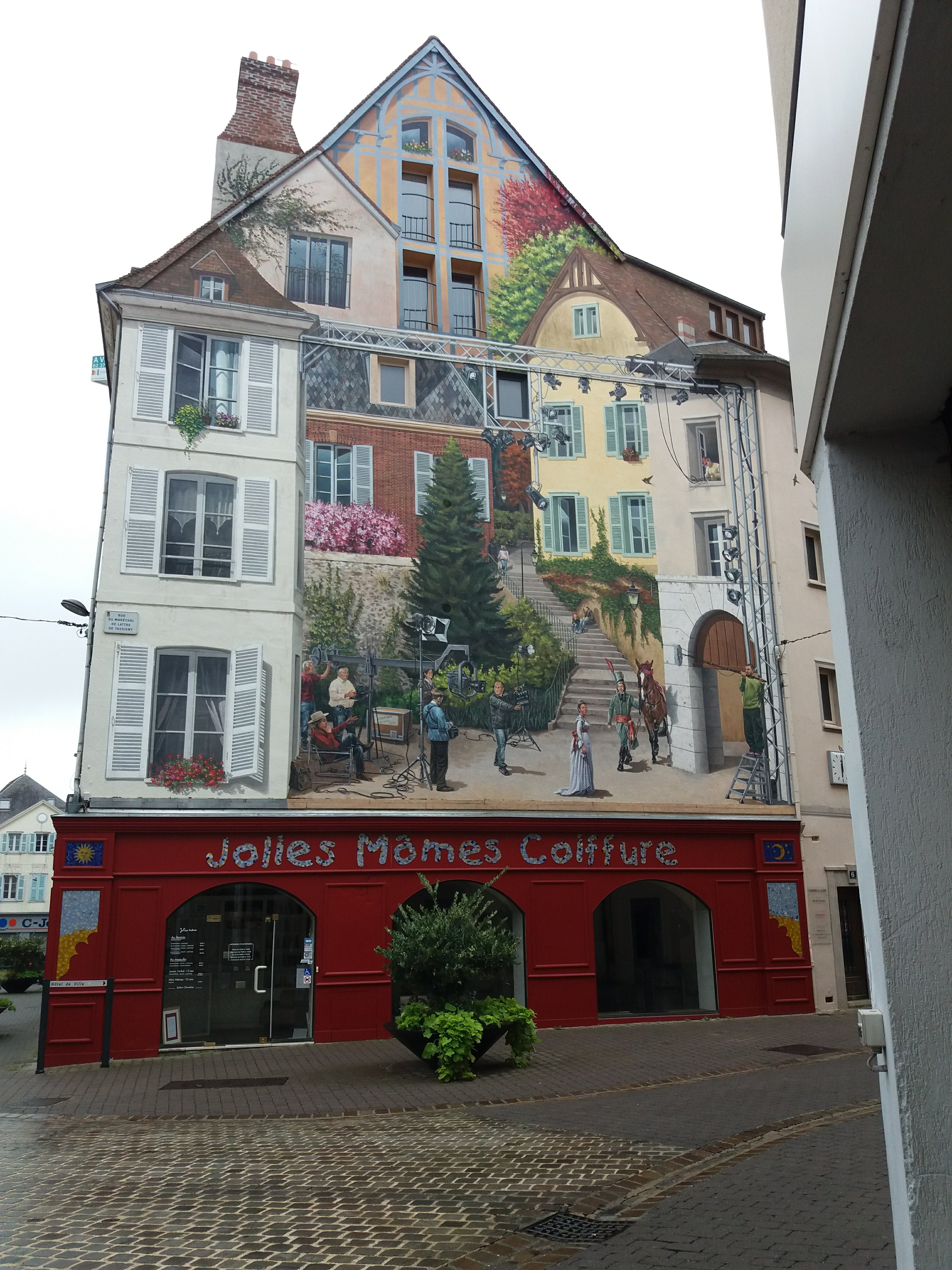
Wandering around the back streets on our second day, in search of provisions, we saw this tromp l’oeil. It was really successful as a deceit to the eye.
Fabulous trompe l’oeil
As it was a bit nippy and dull on our second day in Chartres, we wandered no longer. Tomorrow we move on to Limoges.
Who hasn’t heard of Whitby Abbey? We had intended visiting lovely Whitby on our journey north but ran out of time before meeting our friends at Berwick. Unexpectedly, due to the weather, we found ourselves able to fill in the gap. We stayed on a campsite just outside the town and walked in. The bus back was very welcome after a long day walking around the town and up to the Abbey.
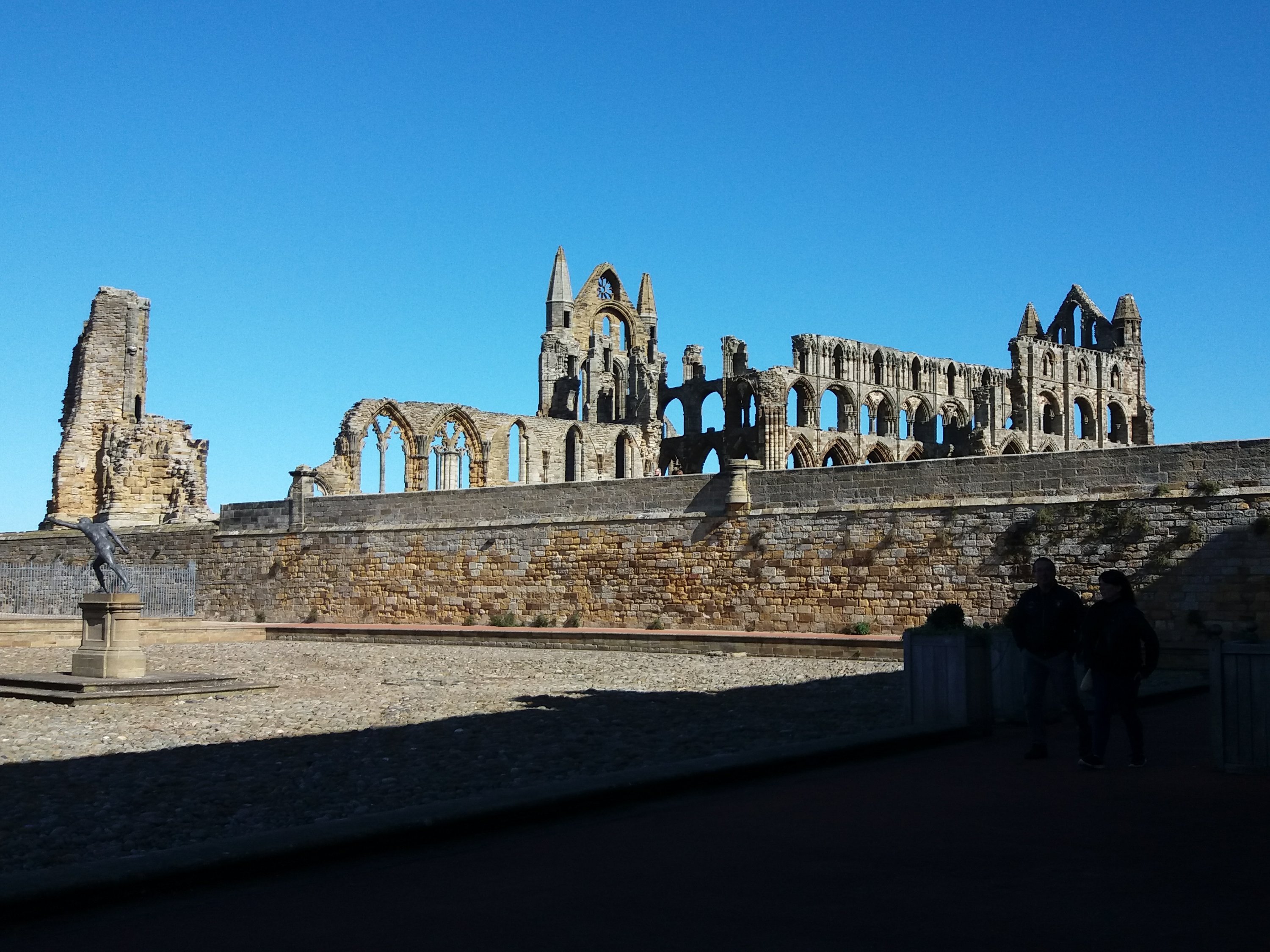
The cliff top ruins of Whitby Abbey are very striking and can be seen from miles away. Possibly the inspiration for Bram Stoker’s famous “Dracula”. It’s monastery was founded in 657 by St Hilda of Hartlepool, daughter of King Oswy of Northumberland, and by 664 had become important enough to host the Synod of Whitby, an event of seminal importance in the development of Christianity. As with all such buildings there is a long and varied history to be discovered in the Visitor Centre.
Whitby AbbeyCloser view of the abbey
The route up to the Abbey involved climbing the 199 steps up to the church of St Mary. The stairs are now paved, but originally there was a wide wooden staircase built for pall bearers taking coffins up to St Mary’s. The church is a mixture of styles but sadly, it was not open for me to enjoy.
St Mary’s church
Having scaled the heights, I had some splendid views down over the harbour and the town.
Looking down on the harbour entranceView down from the many steps to the Abbey
We walked along the pier in the wind and enjoyed watching the powerful waves crashing into the sea wall.
Rough seas crashing into the pier
The town is in two parts, either side of the River Esk. There are two piers and two lighthouses, both sides of the river having it’s own identity. There was plenty to enjoy in the way of small independent shops and eateries, and boat trips to suit all fancies.
Captain Cook was 9 years in Whitby learning his trade and his ship “Endeavour” was a converted Whitby built collier. His first voyage to the Pacific was 250 years ago. A replica of the ship is alongside in the harbour.
Replica of the Endeavour
There is a lot to see in and around Whitby but as usual, we only managed a whistle stop tour of the main bits. We didn’t even partake of the famous fish and chips, a source of bemusement to our Northern friends!
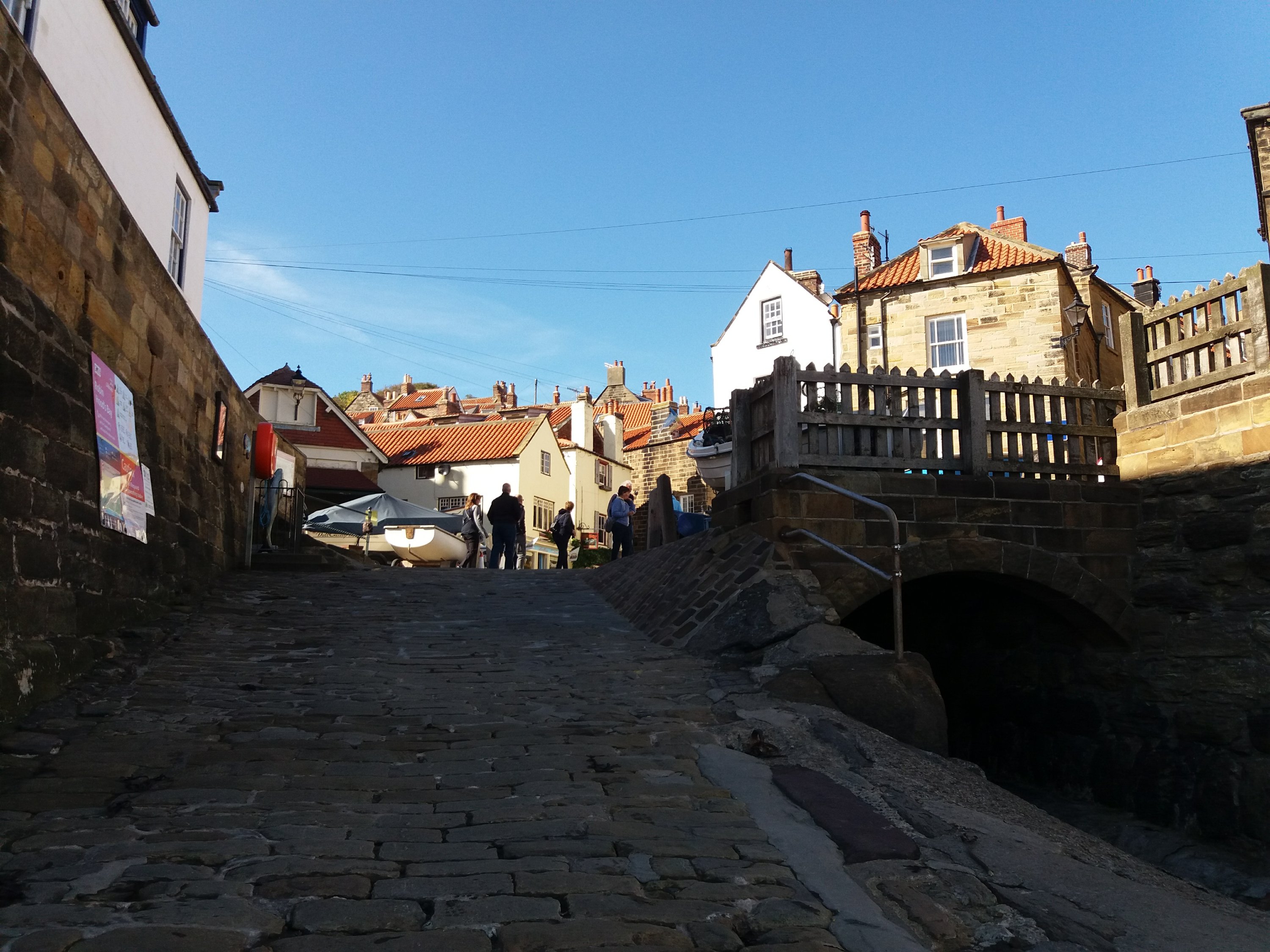
Our next stop was Robin Hood’s Bay which is situated between Whitby and Scarborough, a long awaited treat as we have heard so much about it. This is the most heavily visited spot on this stretch of coast and is made up of gorgeous narrow streets and pink tiled cottages toppling down the cliff-edge site. It is an old fishing village but, in the 18th century, it was reportedly the busiest smuggling community on the Yorkshire coast. It has a recorded history dating back to 1322-1346 when a letter from Louis Count of Flanders to Edward 111, pleaded for the return of his ship which was taken to “Robin Oode Bay” by the people of England. There are many other historic facts and tales relating to this village which makes it a most interesting place to visit. It is also very picturesque.
Pink tiled cottagesPretty village houses
The Old Coastguard Station has been taken on by the National Trust and has been turned into a visitor centre with displays relating to the area’s geology and wildlife. We didn’t see any of the more exciting wildlife, but did enjoy the geology of the bay.
Expansive beach at Robin Hood’s BayPlenty of rock poolsInteresting beach
It was a good walk up and down the narrow streets and across the beach. We definitely enjoyed the welcome break back at the top.
Coffee in the sun at the top of the villageLooking down from the top. No seals!
This was a great place to spend the day and we were delighted that we had managed to find a gap in our schedule. We would love to visit again.
We were nearing the end of our sojourn but could not miss Scarborough. This is the oldest resort in the country which first attracted early 17th century visitors to it’s newly discovered mineral springs. The Victorians enjoyed it as a “Watering Place” but, it was transformed after WW2 when it became a holiday haven for workers from the industrial heartlands. It still retains it’s holiday resort persona with a mixture of beautiful sandy beaches, amusements and old town streets. The more modern shopping centre stretching down from the railway station is less attractive.
Scarborough harbourScarborough bay looking towards The Grand Hotel
We rather liked the bay and could just imagine spending happy days here with the grandchildren. We have a friend who is very likely to do just that as she is a Scarborough girl. Clyde was less than kind in his comments about Scarborough on Facebook, and rightly incurred the wrath of some of our Northern chums! Personally, I rather liked it although, Robin Hood’s Bay is more my “cup of tea”.
Sculpture overlooking Scarborough harbourScarborough marinaLooking up at the tramway on Scarborough sea frontTramway station
The tramway down to the beach is still running and we made use of it after a long walk around the headland. Scarborough is a proper old seaside resort with much to commend it.
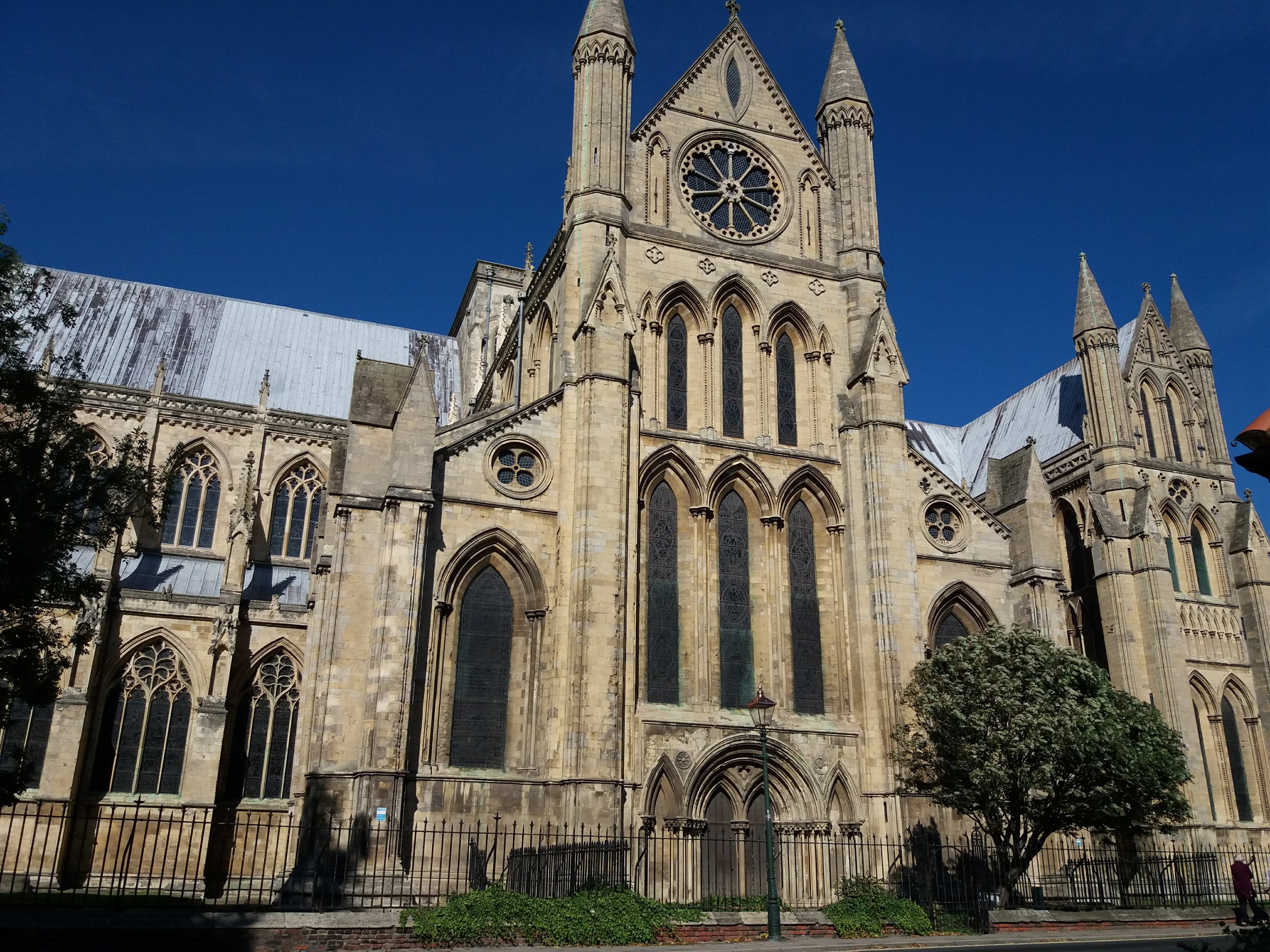
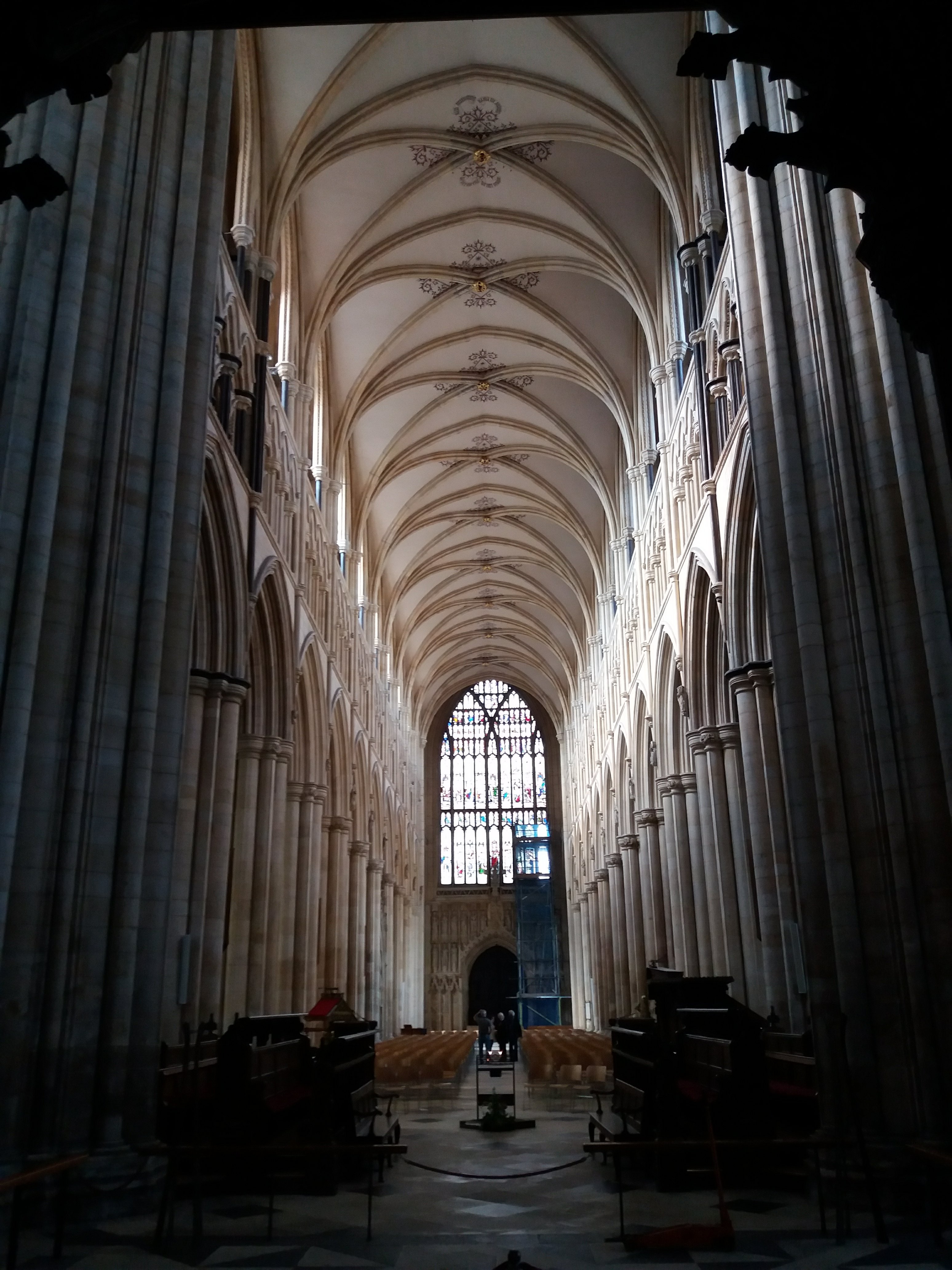
By now, it was nearly time for us to be in Newark on 28th Sep, but we just had time to call in at Beverley to visit the magnificent Minster. Beverley is a small market town with a tangle of old cobbled streets and elegant Georgian and Victorian terraces. The Minster dominates the town with it’s Gothic twin towers. We were treated to an impromptu tour by an enthusiastic German lady who is an enthusiastic adoptee of the town.
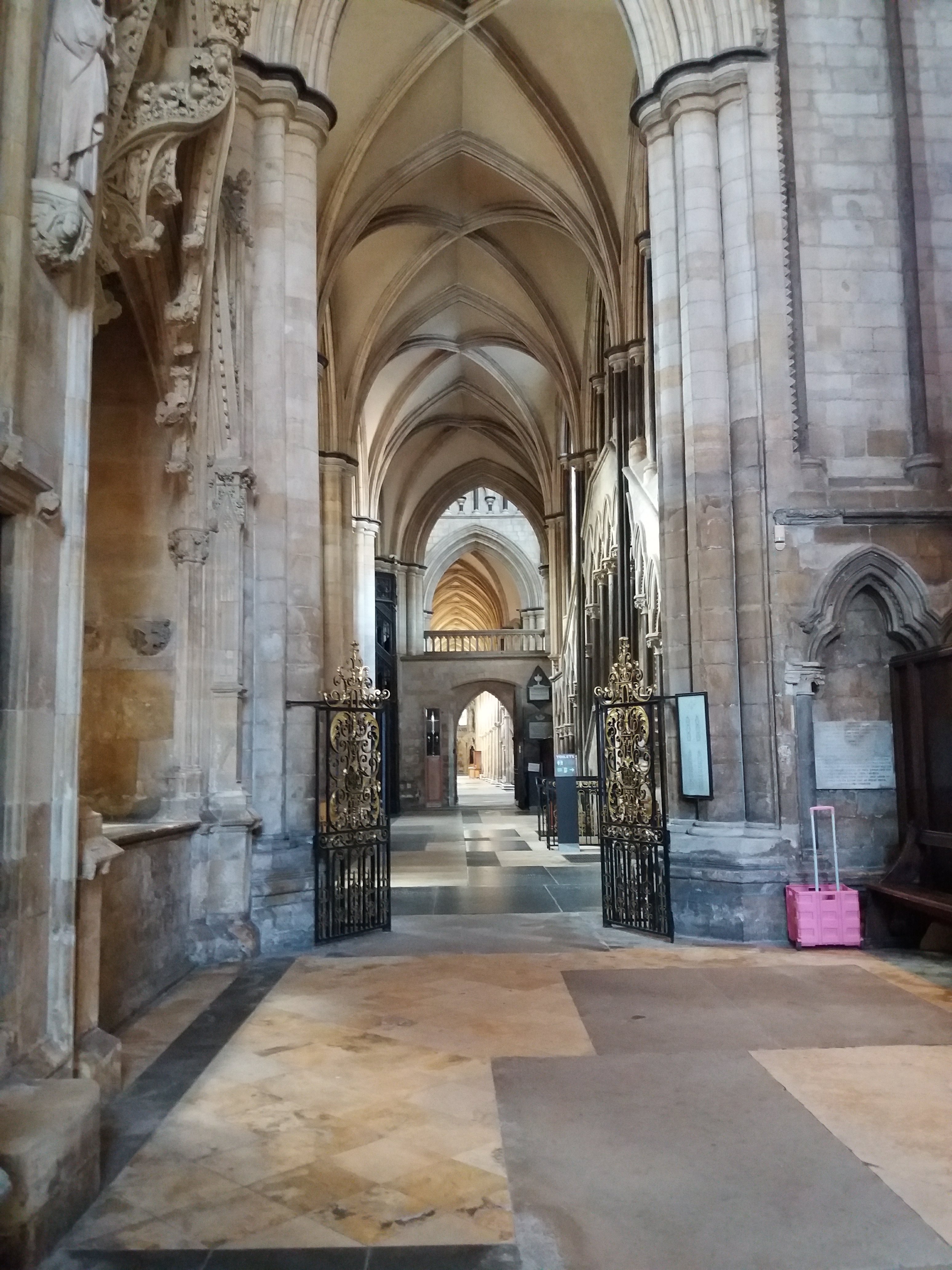
Beverley MinsterInside the Minster
Inside the MinsterBeverley MinsterBeautiful modern sculpture in the Minster
This was the last stop on our way back towards central England and some overdue family time.
After a very rough night, we were glad to have the Culloden visitor centre to visit. We learned so much about the battle that resulted in Bonnie Prince Charlie making his famous escape to Skye. The events leading up to the battle on 16 April 1746 are well documented here and the interactive theatre, really brings it to life. It was a surprise to learn that the battle, which had been on the cards for quite some time, was over in an hour. The conditions on the day were atrocious, and we could sympathise given the Continue reading “Sep 18 East Scotland”
Now we were back on the mainland, we were back on our intended trip north to Ullapool. It is a long way from Skye along fairly narrow roads. We used the A890 and A896 via Kinlochewe. By the time we got to Kinlochewe we were ready to stop for the night. It was quite windy and a bit wet too so we were glad of the break. On the way there we had stopped at some delightful viewpoints alongside Lochs Carron and Torridon.
StrathcarronGlenshielLoch Carron informationLoch Carron informationLoch CarronViewpoint information board
Torridon village is very picturesque, sitting at the top of the loch. We considered staying overnight in the village car park but we hadn’t got far enough on our planned route. Definitely on our list for another time.
As we travelled along towards Ullapool, we came upon Inverewe Garden, overlooking Loch Ewe (believe it or not!). I had seen a feature on the gardens on Gardeners World, years ago and I was really happy to have the opportunity to visit. We were also delighted to be able to enter for free as members of the National Trust.
The gardens are insulated by the North Atlantic Drift and therefore, plants from all around the world thrive here. From the 1860s, Osgood Mackenzie, a man of vision and determination, succeeded by his daughter Mairi, transformed this once barren, windswept headland into a beautiful and unique garden. It is referred to as the Oasis of the North.
There are some fabulous ironworks, interesting sculptures and, of course, several different gardens.
Wrought iron gateway overlooking Loch EweGarden sculpture description
Sculpture
Pond gardenImpressive large trees
As the day was rather inclement, we continued along the A832 along Wester Ross, past Loch Mares, Little Loch Broom and Loch Broom. All very pretty but due to the increasingly heavy rain, not as spectacular as we had hoped.
Loch Broom
We decided to stay overnight on a campsite as it was getting so wild. Search for sites came up with a site at Ardmair Point. We had a lovely pitch overlooking the Loch and were gently rocked to sleep! I managed to see a couple of otters in the morning, which was a thrill. Sadly, I could not get close up pictures and Clyde could not see them at all. I did see them, honestly!!
Loch Broom from campsite
In the morning, we went into Ullapool to get provisions and checked the weather forecast again. The storm Ali was upon us and it was due to get worse over the following week. As we needed to be back in Newark by 27 Sep, we decided to abandon our North coast plan and head across to the East side of Scotland. Decision made, we picked up the A835 to Inverness and crossed the Moray Fifth. Culloden was a convenient place to head for and we booked into the Caravan and Motorhome club site for 2 nights. The site was very handy for a visit to the famous battlefield and visitor centre the next day.
Refreshed after our rest day, we stocked up with provisions at the Co-op in Kyle of Lochalsh, and headed over the bridge to Skye. The first place you come to once across the other side is Kyleakin. We parked up there and had a look around the harbour. There is also a visitor centre which provides information about the author, Gavin Maxwell, of the famous book “Ring of Bright Water”, which was about his relationship with the otters that he kept as pets here on Skye. The book was published in 1960 and is considered a literary masterpiece by some.
Skye Bridge from Kyleakin on Skye
Before the bridge was built, the ferries across to Skye arrived here. It was also a fishing port and there is still a small active fishing harbour there today. It is a picturesque place to start a visit to Skye.
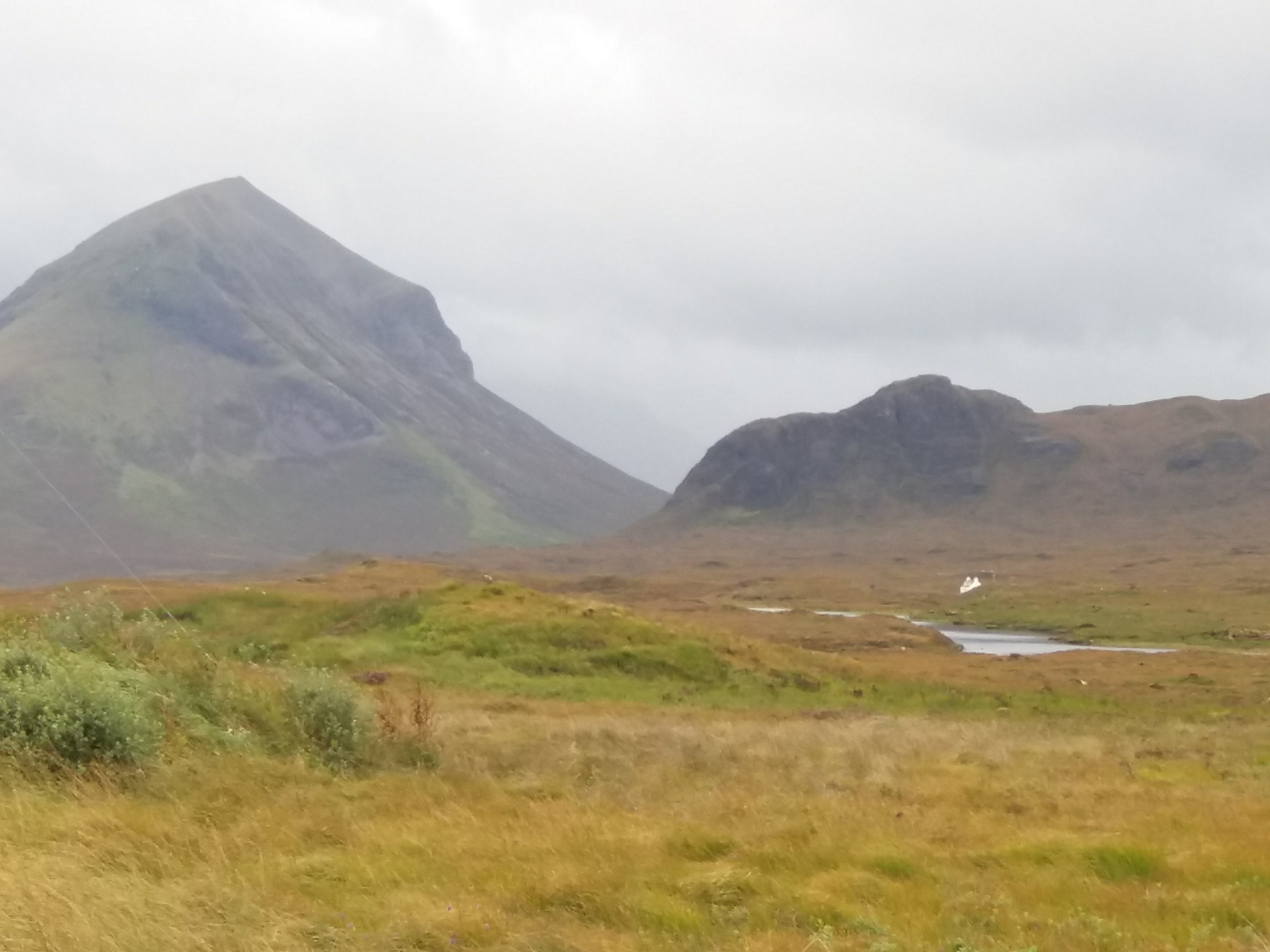
From here we drove along the A87 to Sligachan where we decided to spend the night. Sligachan is overlooked by the Cuillin Hills and is a popular spot for campers and walkers.
View from campsite at SligachanView of the Cuillin Hills from Sligachan
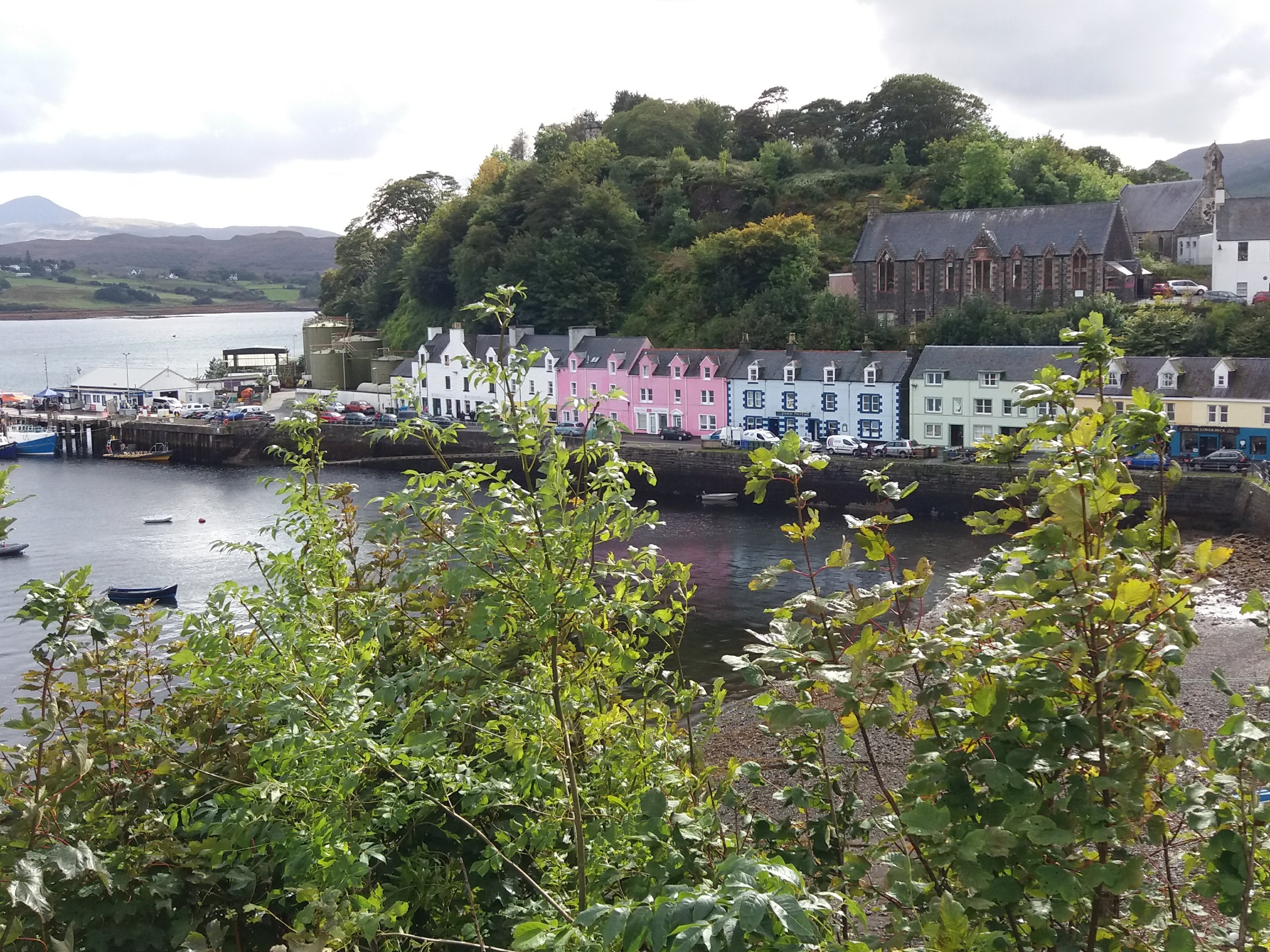
Keeping to the A87 overlooking the Sound of Raasay, we stopped off at Portree, which is the capital of the island. Here we enjoyed the picturesque harbour, along with a contingent from a visiting cruise ship! The weather was rather unsettled so we decided not to stay in the sea front car park overnight.
Portree harbour from the car parkLooking down on Portree harbourPortree harbourPortree harbour looking across to Raasay
From Portree we took the scenic A855 coastal road along the Trotternish peninsula and stopped to view a few of the sights.
Trotternish scenery
This part of the island boasts some bizarre scenery, particularly on the east coast, where volcanic basalt has pressed down on the softer sandstone and limestone underneath. This has caused massive landslides which, in turn, have created pinnacles and pillars. First stop was The Old Man of Storr.
Road to Storr
This is a tall pillar of rock on the plateau of Storr that towers over the road. We parked alongside the road and I embarked upon the long walk up to the stone but, the rain was coming in and visibility was falling rapidly, so I beat a hasty retreat back to Clyde waiting patiently in the van. The views must be stunning from up there on a good day so it was disappointing to be rained off.
Old Man of Storr informationView from pathway to Storr
The next stopping point was kilt Rock and Mealt falls. We also visited Staffin which is just a little further along the road. The scenery on the peninsula was varied and often dramatic.
Cliffs at StaffinKilt Rock FallsWaterfall on Skye
By now we were in need of a plan for the night so we cut across from just North of Staffin to Uig. This is a small port where you can catch a ferry to Harris. We stayed overnight on a small family run campsite near to the ferry port. The mixed weather treated us to some dramatic light and a double rainbow.
Uig harbour at sunsetRainbows over Uig
Our cross country route on a very minor road had been quite challenging for the driver but, at least he was used to the van and driving on the left. We met an American couple who had hired a motorhome and had some traumatizing experiences to recount! It was very interesting talking to them and hearing about their experiences. They had been wowed by the scenery on their 3 week tour of Scotland.
I had rather hoped to visit Dunvegan Castle which is on the west side of Skye but.as ever, we were running out of time if we wanted to see more of the north of Scotland. I compromised and we stopped at Dunvegan village in the mistaken belief that we would at least be able to see the castle from a distance. No such luck, as it was well hidden by the trees.
We followed the A863 to Sligachan and stopped for a wander along the streamside. It was so tranquil there we were tempted to stay again but, I was a woman on a mission to visit Armadale Castle so we pressed on.
Cuillin HillsOne of many pretty streams on the island
Armadale Castle is actually a ruin now but is situated in some lovely gardens with a view of the Sound of Sleat. Clyde decided to stay in the van as he is a bit less enthusiastic than me when it comes to old ruins. I had a walk around the gardens and then improved my knowledge of the history of Scotland in the visitor centre. It is an extremely interesting exhibition with plenty of facts to interest all ages. The museum tells the story of the Highlands and Islands through the story of the powerful Clan Donald.
Armadale informationPart of the ruined castleView from Armadale CastleArmadale Gardens
From Armadale we retraced our steps along the A851 to Broadford where we booked onto a new campsite for the night and stocked up once more in the local Co-op. It was our last night on the Isle of Skye and we reflected that we had enjoyed every moment of our visit. There are beautiful views wherever you look and plenty of wildlife and history to enjoy.
On our journey along the A82, we came across the Commando Memorial at Spean Bridge.
Commandos statueCommandos plaque
It is a beautifully scenic spot for the memorial and there were a lot of visitors there in spite of the chilly and damp conditions.
View from Commando Memorial
At Invergarry we changed onto the A87 and travelled past Loch Garry and Loch Cluanie
Loch Garry
A87 snaking along through Five Sisters
The rest of our journey to Kyle was all about the scenery. We were constantly amazed by the glens and the lochs and our senses were overloaded.
One of the Glens along A87
We made a slight error of judgment as we approached our destination at Morvich, near Kyle of Lochalsh. We were tempted by a scenic route up the mountain road at Ratagan. It was narrow and twisty as well as steep but had some lovely views of the loch below.
A87 KyleLoch DuichLoch Duich
We didn’t complete the route as it was taking us away from our intended destination. We later discovered that we could have followed the road along the coast overlooking Skye and all the way to a very lovely tea room. Hmmm, seems a long way for a cuppa!
As we bowled along the A87 again, we spotted a well attended viewpoint and stopped to see what it was all about. There was an amazing castle, right on the confluence of Loch Duich and Loch Alsh. The castle was Eileen Donan castle, one of Scotland’s most famous landmarks. As we got closer to it, we were able to appreciate the beauty and location that made it so famous.
First glimpse of Eilean Donan Castle from a viewpoint on A87Eilean Donan CastleEilean Donan CastleEilean Donan Castle from the lochside
The castle has a long history starting in 634AD when Bishop Donan chose the tranquil spot to settle and create a monastic cell. Alexander 11 later established the first castle in the 13th century, in an an effort to help protect t the area from Viking incursions. The castle has expanded and contracted over the centuries until 1719 when it was involved in one of the lesser known Jacobite rising. Three Royal Navy frigates were sent to deal with the uprising and after bombarding the castle, it was blown up using the 343 barrels of gunpowder that was stored inside. After that, it lay in ruin for nearly 200 years. Much of the castle was reconstructed as a family home between 1912 and 1932 by Lt Col John MacRae. It is now open to visitors and is extremely popular with families. It was certainly busy on the day we were there.
Close to our overnight stop was Loch Alsh
Loch Alsh viewpoint information
From the viewpoint you get a great view of the Skye bridge
Skye Bridge from the A87
We gave ourselves a rest day before crossing the bridge for our next excursion. The scenery all around was fabulous and very relaxing.
Our route to Skye took us through Glencoe and Fort William. We kept to the scenic route along the A 828 past Loch Creran and Loch Linnhe.
Loch Creran along the A828Loch Linnhe
The weather was not too good at this stage and most of the scenery around Glencoe was shrouded in mist. We stopped off at the visitor centre, which was interesting, and had a short walk in the rain. It would have been a great place to spend a day if it had been less inclement.
Glencoe informationGlencoe regionView from Glencoe Visitor CentreGlencoe visitor centre
From Glencoe we travelled along the A82 to Fort William where we had hoped to stay overnight by the ferry. Unfortunately, there are notices up which specifically forbid overnight camping so we looked at a couple of alternatives on Park4Night and settled for this spacious spot!
Overnight stop at Fort William
By the time we stopped for the night, the wind was quite strong and we were glad not to be amongst the trees! In the morning the weather had improved and the beautiful colours of the bracken and heather were enhanced by the sunshine.
A82 viewsView from A82 on the way to Morvich
All along the A82 we had stunning views and our progress was slow as we had to keep stopping for a scenic cuppa.
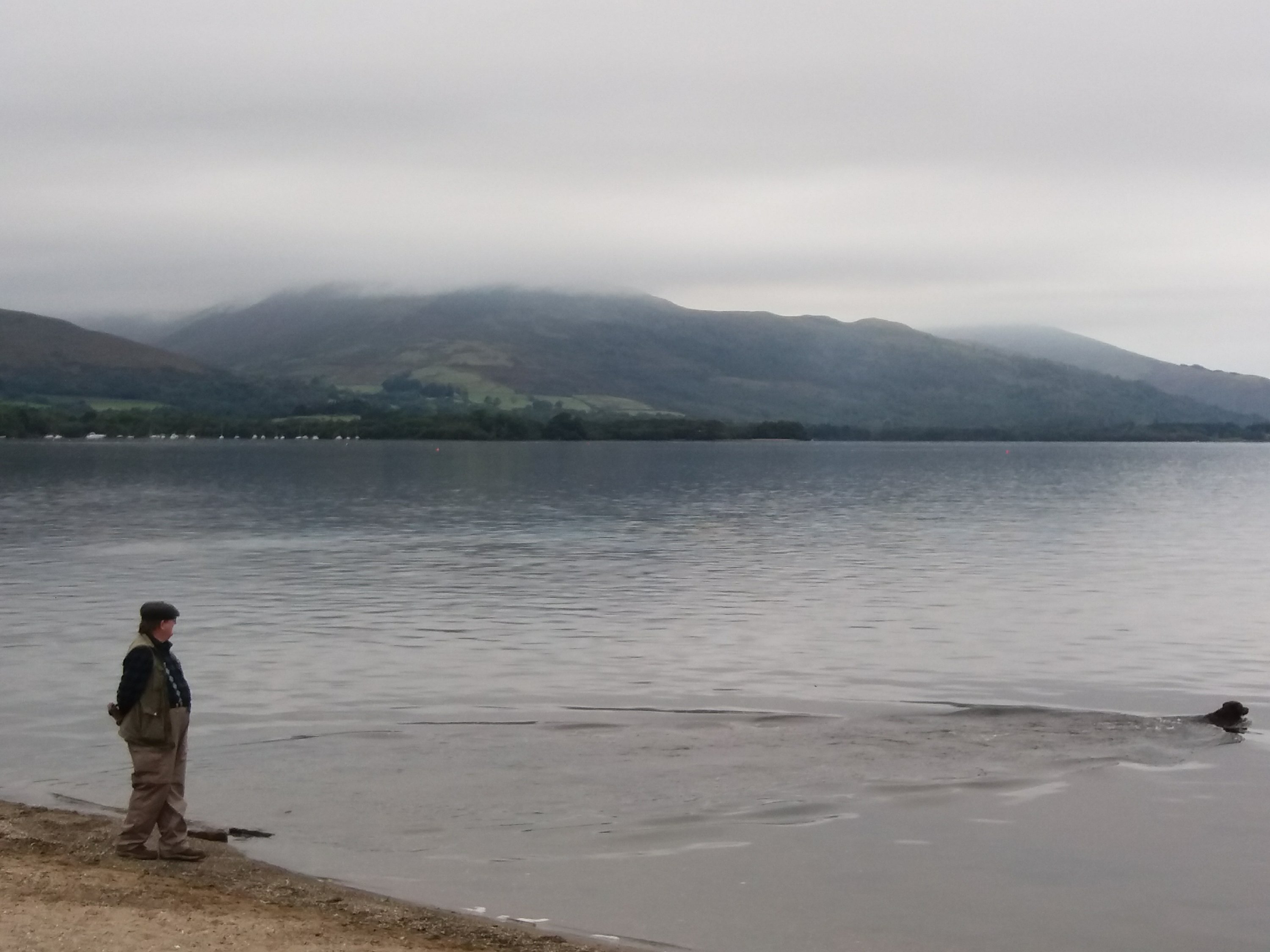
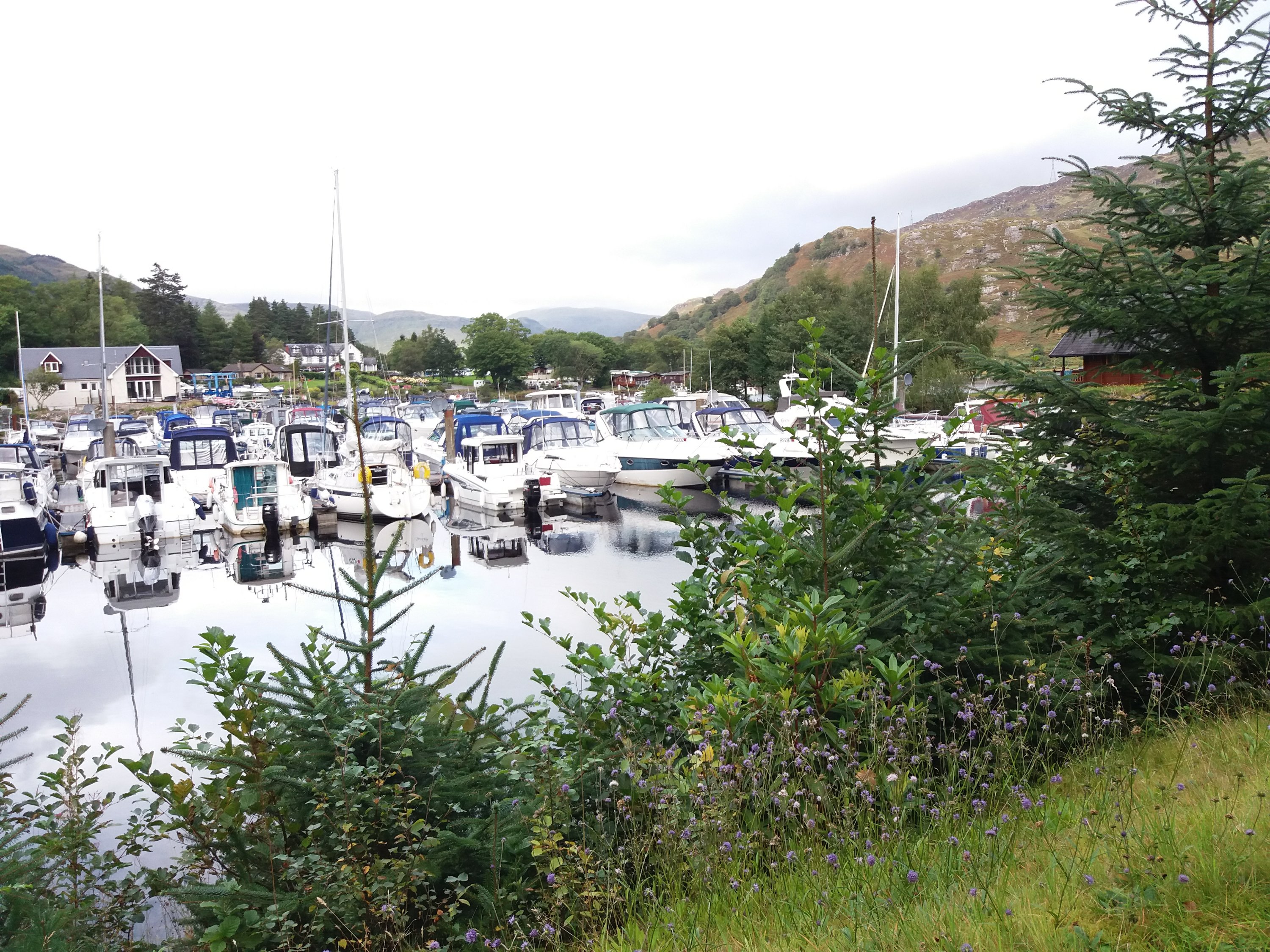
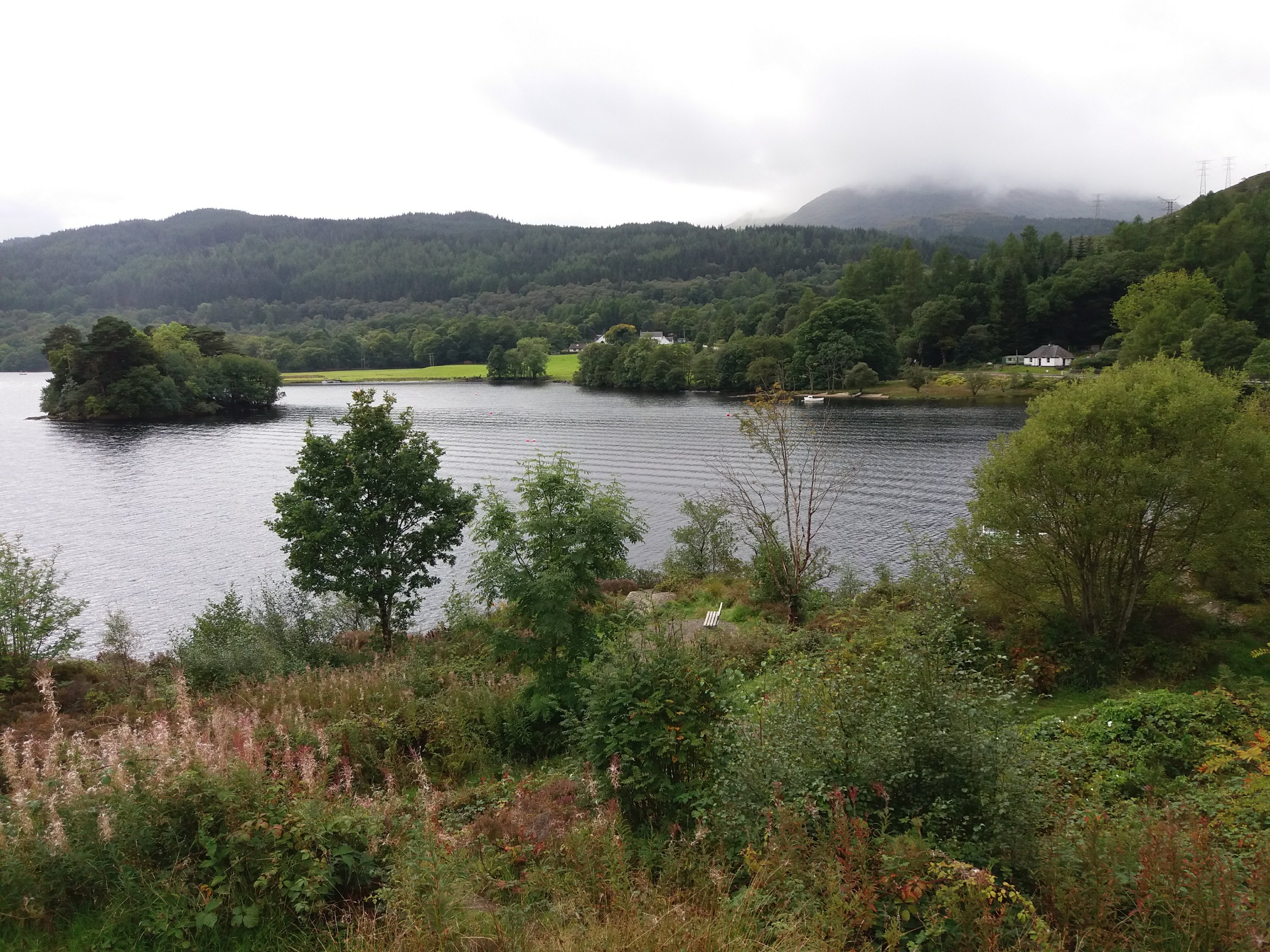
After Falkirk we headed across the Trossachs National Park to Loch Lomond. We found a nice sheltered car park behind the Tourist Information and stayed the night. There were some friendly folk there, also in motorhomes, so we had a very pleasant evening. We also took a walk along the shore and enjoyed the view. Next day we moved on to a small touring site at the North end at a place called Ardlui. We stopped on the way at a small touristy place called Inveruglas. It is a preserved lochside village with a pier. It made a pleasant stopover for an hour or so. Once at Ardlui we parked for the night overlooking the loch. We had some more interesting neighbours, and a great view of the loch activities. Plenty of folk on paddle boards and small dinghies. There were also some waterskiers, all of which made an entertaining sight.
Here is a selection of views from the area.
Scenery along A82 TrossachsMore TrossachsSouth end of Loch Lomond at BallochAlong the A82 travelling NorthThe marina at ArdluiView of Loch Lomond at ArdluiNorth shoreLoch Lomond infoMore view!
The next day we proceeded along the A82 and A85 to Oban. We had decided not to visit Mull on this trip but, to spend some time on Skye. We had a look around Oban and enjoyed lunch overlooking the harbour.
Oban harbour
We then started the slow drift north with an overnight stop at Connel overlooking Ardmucknish Bay.
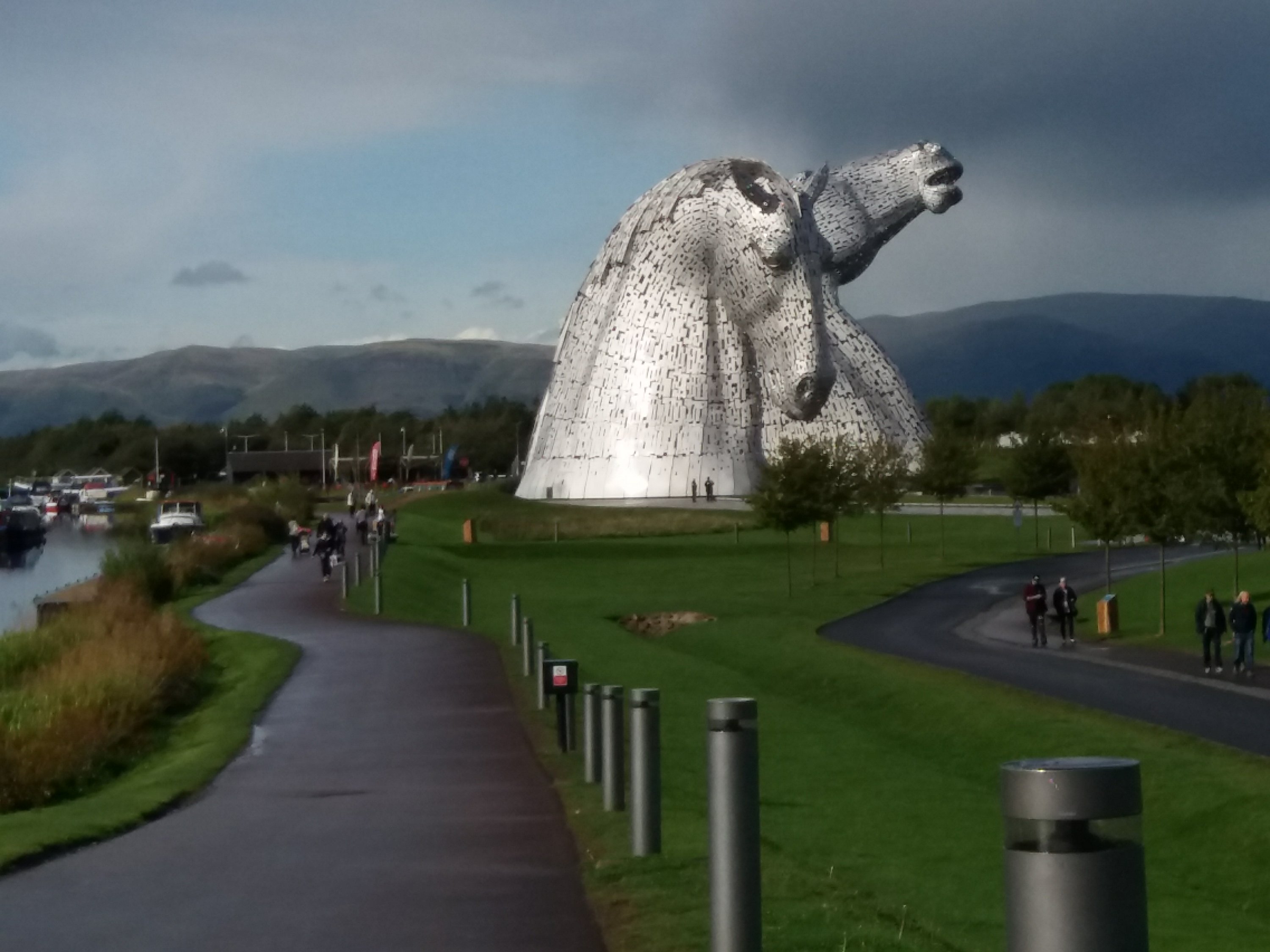
No trip to Falkirk would be complete without a visit to the Kelpies. We were able to stay overnight for free but sadly there was no view of the Kelpies from the overnight parking place.
We thought the Wheel was amazing but, we were seriously stunned by the beauty of these enormous statues.
Approaching the KelpiesCloser view. Duke(head down) and Baron(head up)
This was another British Waterways project for the Millennium. This area was reclaimed from an industrial wasteland. The Forth & Clyde canal runs through. The Kelpies are housed in a 350 hectare recreational green space called the Helix. They stand 30 metres tall, and are the world’s largest equine sculptures. At night they are illuminated and can be seen from miles around.
Night illuminationBeautiful view of Duke
We went on the guided tour to find out more. Once again we had a proud and enthusiastic guide. The artist who designed the sculpture used two Clydesdale horses as his models.
The sculptor, Andy Scott with his two models
The structure was complex and we saw how it was created onsite. The tour included a visit inside the structure too.
Inside a Kelpie
Why are they called Kelpies? They were a spirit from the canals which were used as a threat to children to induce good behaviour. “Be good or the kelpies will get you!”
The sculptures are surrounded by water and it reflects their image.
Evening reflection
This was a high spot for us. We do love a statue but these were something very different. The story of their inception and execution was fascinating.
Many moons ago we owned a succession of river cruisers and had a dream to buy a narrowboat. The plan was to take a break from work and travel around the canals of the UK. That plan changed when my job gave us the chance to live in Germany for 5 years. The narrow boat idea became a motorhome instead. One of the places that,as boaters, we had read about and marvelled at, was the Falkirk Wheel.
Until 1933, the Union canal and the Forth & Clyde canal, were linked via 11 locks. They took a day to transit. However, once the trains arrived it was no longer necessary to transport goods on the canals and many fell into disuse. It was due to British Waterway’s Millennium link project that many canals were restored and thus the plan to link the two again was formed. Rather than recreate the lock flight, BW wanted to mark the Millennium with something more spectacular. A team was formed from several different organisations and the design finally came together. The wheel opened in 2002.
The Falkirk Wheel is the only rotating boat lift in the world and is a spectacular tribute to the design and build teams.
View from our camping place
We were really lucky with our overnight place in the top car park. We had a splendid view and thoroughly enjoyed watching it rotate.
Upright viewThe two gondolas almost level
There are some fascinating facts displayed
Amazing facts
We just couldnt resist the lure of a trip on the wheel. We did get a discount as we had paid to stay overnight. The views were pretty good from the top and it was a good way to appreciate the beauty of the design at close quarters.
View back towards the wheelView out towards the Trossachs
The guide was very informative and obviously very proud of the Wheel and the achievement of his countrymen. The Wheel is a worldwide wonder and attracts a lot of visitors. We were certainly not disappointed.
One place we had long wanted to visit was Edinburgh so, after leaving our friends, we moved on to the great city. We treated ourselves to a 3 night stay on a campsite near to a bus route into the city. This enabled us to spend 2 whole days in the city and one of those was dedicated to visiting Edinburgh Castle.
Hazy view of the castle from Waverley Bridge
The castle has dominated the skyline for more than 900 years. It has served as a royal palace, arsenal, gunfoundry, state prison, place of safe keeping for the Scottish crown jewels, and more recently as an infantry barracks. It is an enormous site with a lot to see. We had a really good day there and felt it was worth the cost of entry.
View across Edinburgh from the battlementsFurther battlements viewMons MegMons Meg informationSt Margarets ChapelStatue of General Haig
Edinburgh was well established by 1100 and was recognised as the capital of Scotland by 1350. The old town stretches, like a Herringbone, down the ridge below the Castle with just one major street and a host of narrow closes (alleys) leading directly off it.
The Old Town was small and contained on all sides which led to the development of high rise housing. By the late 1600s some houses were reaching 9 stories or more. Gladstone’s Land, at the upper end of the Royal Mile, is one of the few old houses remaining from this period. It was built in 1550 and has been recently restored by the Scottish National Trust. I went for a guided tour which was most interesting and led by a sprightly 91 year old guide. Her only difficulty was getting down the steep stairs! There was nothing wrong with her brain. I had a lovely chat with her after the tour about travelling in a campervan. She and her husband had a campervan in the 1950s. She was astounded to hear that we have a shower and central heating in ours.
One of the original decorated ceilings in the houseView into the close from the top floor
We walked the length of the Royal Mile and then down to the Scottish Parliament. There were many stops along the way as we spotted different points of interest. St Giles Cathedral is well worth a visit. The Scottish Parliament building was quite controversial when it was built and cost a massive amount of money. The architect was Catalonian and died before the build was complete which was a cause of much concern at the time. However, the building was completed eventually and even won a RIBA Stirling prize in 2005. You can enter the building for free and view parliamentary proceedings in the debating chamber from the public gallery. We decided it was a must for us and it just happened to be the first day of the new parliamentary year following the Summer break. We listened to Nicola Sturgeon and Ruth Davidson before quietly slipping out.
Scottish Parliament building
St Giles Cathedral
There were so many interesting buildings and sights it is not possible to include them all. We were only able to see a small percentage.
Outside the National Gallery of ScotlandLooking towards The MoundThe Scott Monument
We enjoyed our visit but were now ready to move on towards the West. Next stop Falkirk.
Two years ago, our lovely next door neighbours moved to Allanton near Berwick. We finally found ourselves in a position to pay them a visit and make use of their drive (and washing machine!). Whilst we were there we visited Berwick and Lindisfarne.
Berwick is England’s most northerly town. It was once Scotland’s wealthiest royal burg and it’s greatest seaport. It’s strategic location and commercial importance put Berwick in the frontline during 300 years of warfare in the Middle Ages. From 1296 to 1482 it changed hands 13 times between the kingdoms of England and Scotland:
List of ownership changes
The Tudors were keen to hang on to Berwick and spent vast sums on its defences. In 1558, just before Elizabeth 1 came to the throne, the new Italian designed ramparts were commissioned. These walls took 12 years to build and cost £128,648 (almost £40 million today). The Union of the Crowns in 1603 meant that the town would never change hands again.
Today, you can walk around the walls enjoying the views and the three bridges. The Old Bridge, also known as Berwick Bridge, dates from 1611, The Royal Tweed Bridge is the most recent, completed in 1928, and The Royal Border Bridge is a 19th Century railway viaduct designed by Robert Stephenson and opened by Queen Victoria in 1850.
The Old Bridge with glimpses of the more recent bridges beyondThe most recent two bridges
On the river Tweed, there is a variety of wildlife and a large colony of swans. It is the second largest mute swan colony in Britain.
There are plenty of opportunities to explore Berwick’s history. The Borough Museum and Art gallery are within the historic Barracks. Dewar’s Lane Granary was immortalised by LS Lowry in his paintings and it now houses a cafe, gallery and 5* youth hostel.
Information about ‘The Lions’ – used in many of Lowry’s paintingsThe actual building described above
It was interesting to spend time in an environment that had obvious impact on Lowry’s life and his paintings.
The Main Guard, which was moved from Marygate to Palace Green in 1815. Contains the history of Berwick life through the ages
The town itself is quite attractive and the main street is dominated by the spired Town Hall. You can take a tour around the Guild Hall and old gaol cells. We didn’t as we had arranged to meet our friends for their own version of a guided tour, followed by a delicious lunch in one of the independent tea rooms.
Spired Town Hall in Marygate
As ever, there was more to see and do in Berwick and we would enjoy another visit. There is a campsite just across the river with views out across the estuary………..
On the way back to Allanton, we stopped at the oldest iron suspension bridge in the UK. It is called the Union Bridge and I have included a picture of the history board below.
Iron suspension bridge informationThe actual bridge
We just had to stand on it with one foot in England and one in Scotland. It is actually quite understated, but historic nonetheless.
LINDISFARNE
Next day we had a trip to Lindisfarne (correct name is now Holy Island). To access the island you have to await low tide so that the road across the causeway is accessible. We had 6 hours in which to make our trip.
View from the causeway
Lindisfarne Castle is run by the National Trust and as we are all members, we went for a look. Sadly, it has been undergoing a program of renovation and all the furniture has been temporarily removed. The castle sits on a small pyramid of rock half a mile from the village. It was built in the middle of the 16th century to protect the island’s harbour from the Scots but had fallen into disrepair when it was rediscovered by Edward Hudson in 1901. He was the founder of Country Life magazine and he commissioned Edward Lutyens to turn it into an Edwardian country house.
Lindisfarne castle from the bridgeCastle view from the causewayView from the castle
The village was busy with school parties and a few foreign tourist groups. We could have visited the Priory ruins but as it was a bit of a nippy day, we opted for a bowl of soup in the nearby hotel, and viewed it from a warm window seat.
There are some shops selling local produce, honey and mead are popular. The charm of the place is its remoteness from the mainland and the wildlife. On the way back across the causeway, we saw a seal in the shallows. Presumably it was awaiting the incoming tide.
Alnwick was on our list of places to visit if ever we were up this way. It has had a turbulent history due to the fractious relationship between England and Scotland. Alnwick has survived wars, skirmishes, sacking and burning. King Malcolm 111 of Scotland was killed here, marked with a cross near the castle, and King William of Scotland was captured here in the Second Battle of Alnwick. The castle was built and expanded by the Percy family (it was given to Baron de Vesci after the Norman Conquest and later acquired by the Percy family) and a wall was constructed around the town itself to defend it against the Scots Border Lords. It is a much more peaceful place today but its history can be seen throughout the town.
We were able to park near the castle and walk alongside the gardens into the town. We were only there for the day so we did not expend a great many British pounds to visit the castle and gardens. There was plenty to enjoy for free and we made the most of the day.
Having driven through the town looking for a car park, we already had our bearings. We went into the market place and ate our sandwiches on a rather splendid bench. The town seems to specialise in splendid benches! We washed them down with a cuppa from one of the cafes in the square. Never let it be said that we don’t support the local economy.
Alnwick Market Place
We enjoyed roaming around the historic streets before returning to the Castle and Gardens area. The railings separating the gardens from the public footpath, were splendid, and we had tantalising glimpses into the gardens beyond. We missed seeing the splendid water sculptures and the grand cascade, although we got a quick peek through the entrance gateway.
Decorative railings at Castle Gardens
The grounds surrounding the castle are open to the public and would make an ideal place for a picnic. There were lots of families enjoying the space.
View of the castle from the gardens
Barter Books is one of the largest second hand and antiquarian bookshops in Britain. The bookshop is housed in the old railway station and is an absolute joy to visit. There is plenty of comfortable seating, coal fires and an in-house Station Buffet serving fresh homely food all day. I could have spent all day in the bookshop but, sadly, I had to relinquish the thought and move on.
Barter Books entranceInside Barter Books
On our way back to the van, we had a look at the enormous treehouse on the outskirts of the gardens. It houses a restaurant that is accessible without paying to go into the gardens.
Enormous treehouse which houses a restaurant based in the gardens
There is a lot more to see in Alnwick but we were really just passing through. I would recommend it as a place to visit for longer than one day.
We visited Beamish on a less than beautiful day (there was rain), but we had such an interesting day we didn’t mind.
The museum currently tells the story of life in the North East of England during the 1820s, 1900s and 1940s. They are working on the 1950s but that part is not open yet.
We found the 1900s really fascinating as the shops and bank are so reminiscent of our own childhoods, particularly Clyde’s. There were so many places to visit in each time period that it was impossible to see everything, so we had to be selective.
Barclays Bank counterShopkeeper explaining the till system!Inside the Co-op
The people in the shops etc were dressed in the costume of the day and there were goods for sale. They were all very knowledgeable and very happy to share this with the visitors. In the Co-op, Clyde was transported back to his childhood and he can still remember their dividend number! We were amazed by the money handling rules and the kit used to send it to the cash office and receive change. There were no counter top tills.
Garage workshop
There were some old cars on display at the garage but, I was interested in the workshop with all the bits of kit.
Inside the printersPrinting plates and press
The printing works had displays of printed material and newspapers from the era. The machinery was very evocative of the time before computers.
HaberdasheryOpen top tramOne of the beautiful old trams in action
We had a couple of trips on the trams to save our legs. The seats were a bit hard though!
Puffing Billy. This is older than Stephensons Rocket!Puffing Billy’s carriages1900s schoolroom
This school room reminded me of my school in the small Suffolk village where I grew up.
Mine buildingsDrift mine
Of course, this was a mining area and there was an exhibition of mining memorabilia along with an illuminating display of the development of safety lamps (pardon the pun!) There is also a moving photographic portrait of the huge numbers of miners who worked in the mines. The camaraderie was so important to these men and boys for safety and friendship. The strength of their bonds led to the development of the village platoons who fought in the first world war, and died, together. Very moving.
This is a fascinating view of life in earlier times and we would like to go again once the 1950s phase is complete.
After a couple of nights on a CL that was handy for Bamber Bridge, we took a scenic route across the Yorkshire Tales to Durham. We nipped up the M6 to J37, took the A684 via Hawes to Leyburn then headed for the A1 for a quick sprint up to Durham. It was a beautiful drive with plenty of open views. Somehow it looks so different from the Peaks but we could not decide how.
i Dales sheepYorkshire dalesBit of tourist info at a viewing point on the road to Hawes
Hawes is a pretty market town well worth a visit. We only had time for a short stop but it was bustling with market activity. We had stopped on the way to view the Dales and met a lovely
River in Hawes
Dutch couple who had already been to the market and stocked up. They were really enjoying their 3 weeks visit to England.
After we had finished stretching our legs in Hawes, we completed our journey to Durham Caravan and Motorhome club site ready for our trip into the city next day.
The trip into Durham was easy, if a little dicey. We had to walk to the park & ride via the busy dual carriageway, slip road from the A1 and 4 lanes of traffic on the road past the P&R! That got us awake and active. The trip to the city centre was £2 for me and free for Clyde, and took 10 mins. Once there we quickly found the Durham Pointers(local guides). They were very helpful and provided city maps and guidance. We had a look around the covered market then headed to the Cathedral.
Memorial statue in the market squareOne of the many narrow cobbled streets in the centreOutside the covered marketMarket day
We visited Durham twice and on the second visit, on Saturday, there was a rather nice market taking place. It added a real buzz to the place and it was certainly a lot busier that our visit on the Thursday.
View of the river Wear from Elvet bridge
The river Wear flows around the centre of Durham and there are several bridges affording pretty views.
Framwellgate bridge. Looking up to the castle
After enjoying the market place and some of the cobbled streets, we made our way to the Cathedral. As ever, it is undergoing some restoration work. We parted with £3 each to enter, so added a little to the coffers. I had just taken a picture of the impressive interior when I discovered that photographs are forbidden, oops!
The cathedral sporting a fancy hat!Durham CathedralInside the cathedral. Taken before I realised photos are not allowed!
In fact, the exterior was also very attractive and on my second visit, I was able to explore the cloister and photos were allowed there.
Wooden ceiling of the cloistersDurham Cathedral CloistersView from the cloistersArty cloister view
On the Saturday, we had decided to visit the castle. We bowled enthusiastically into the Heritage Centre to purchase a ticket, to be informed that we had to join a tour, and they were all sold out! We were not the only visitors to be disappointed. Oh well, that’s back on the to do list. As I had been thwarted, I decided to have a look at the Open Treasure exhibition in the Cathedral instead. Clyde took the opportunity to do his own thing for an hour and then we met up for a cream tea. Shocking impact on the waistline, but had to be done.
View up to the castle from one of the bridge over the Wear
This was as close as I got to the castle.
Castle view from Framwellgate bridge
Our visit to Durham was great and we broke it up with a day at Beamish open air museum. I will write up on a separate post.
For a short break, we selected a lovely private campsite 3 miles from Lancaster. The site was called Ashton Hall Caravan Site and is in the grounds of an old manor alongside a golf course and garden centre. It is a beautiful setting which would have been even better had the weather been less inclement. However, it was very convenient for Lancaster and the nearby coastline overlooking Morecambe Bay.
After an abortive attempt to find a bus from outside the campsite, we drove into Lancaster, which was actually very straightforward and there was plenty of parking. The town is very compact and attractive and we had a very pleasant few hours ambling about. There is a castle which we walked around but, we did not go in as there was a special event on involving witches, which did not appeal to us. Next to the castle is the Lancaster Priory and church of St Mary which we did go into. Not particularly remarkable but free.
View across Lancaster from the castleView over LancasterLancaster Priory Church of St Mary
Castle gate
On the way back to the car park, we popped into the Cathedral of St Peter. We would have liked to visit the Ashton Park memorial and butterfly house but, we had run out of time. There is a lot to see in and around Lancaster and it would be worth another visit in the future. But, we had to be in Bamber Bridge to get the TV fitted so, we put it back on the to do list.